We are sharing here the latest edition of our “New Research” series. It provides the public with an opportunity to read the most recently published Rockefeller Archive Center research reports. These reports have been prepared by RAC research stipend recipients who have come to our reading room to study the archival materials that we preserve and make available to users from around the world. The reports showcase the wide range of collections that they have seen, spanning different time periods and disciplines. These reports often highlight philanthropy’s impact around the world. The reports in this edition reflect researchers’ study of records from the Rockefeller Foundation, the China Medical Board, the Rockefeller University, the Ford Foundation, and the Office of the Messrs. Rockefeller. Also cited are the personal papers of Edward Tatum, Alfred E. Mirsky, F. Champion Ward, and John D. Rockefeller, Jr.
“Biology of the Goldfish in Republican China and during the Economic Reform Era” by Lijing Jiang
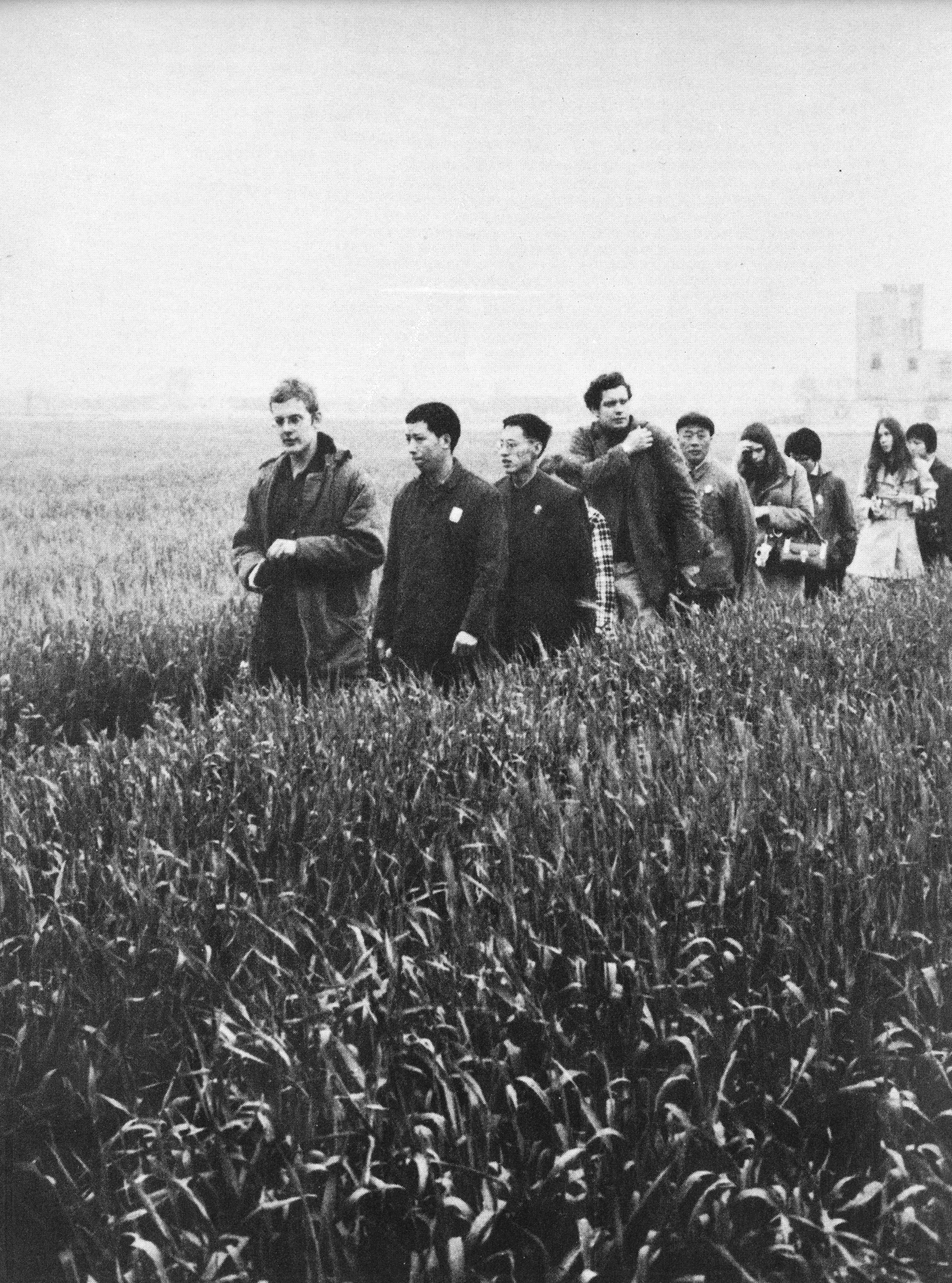
Lijing Jiang looks at a United States-China relations in two different eras, as seen through the lens of scientific contacts and exchanges. “Biology of the Goldfish in Republican China and during the Economic Reform Era” addresses why research in China did not use the “classic” fruit fly in genetic studies. Instead, Chinese research chose to focus on the goldfish for genetic and embryological research. She notes that this selection reflected long cultural and economic traditions in China. It also had political implications, following the dramatic change in governance in 1949, as Mendelian genetics was rejected and replaced by Soviet-inspired Michurinism.
Lijing Jiang’s research in China Medical Board records of the Rockefeller Foundation, as well as in the professional papers of Rockefeller University faculty allowed her to see the changing dynamics of Chinese genetics over the decades. The records also highlighted the network of connections between US and Chinese researchers, navigating the scientific and political changes during the twentieth century.
Lijing Jiang is an assistant professor in the Department of the History of Science and Technology at Johns Hopkins University. Her interests include the history of biology and biotechnology, with a special interest in these sciences in the East Asian context. She was a 2015 RAC research stipend recipient.
“Harnessing Brilliance: The Portland Gifted Child Program and the MacArthur Foundation Fellowship” by William Krause
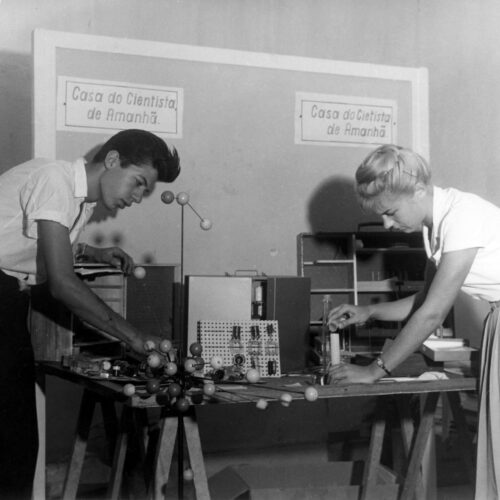
During the Cold War era, educators and government policy officials sought new ways to encourage the “gifted” in American society. William Krause’s research at RAC enabled him to study philanthropy’s effort to support this concept. In “Harnessing Brilliance: The Portland Gifted Child Program and the MacArthur Foundation Fellowship,” he analyzes two case studies that approached the goal from different angles.
The first case study was a Portland, Oregon public school initiative to encourage intellectually-gifted students, a program supported by Ford Foundation grants. The student selection process for this program combined intelligence testing, achievement data, and qualitative teacher evaluations. The second program that he looked at was a fellowship program of the MacArthur Foundation, which was focused on “geniuses.” F. Champion Ward, a former Ford Foundation officer, served as a consultant for the MacArthur Foundation, and the researcher found his personal papers valuable for understanding this program. The purpose of these grants was to provide creative individuals with the freedom to pursue excellence without institutional constraints or the burdens of financial considerations impacting their work. In the report, William Krause points out that these two programs, while very different in their focus, were similar in that they emphasized the Cold War-era belief that to achieve economic, social, and cultural goals, concrete policies fostering intellectual excellence were essential.
William Krause is a doctoral candidate in modern US history at Vanderbilt University, with particular interests in intellectual and cultural history, political economy, and the history of science since the 1890s. He was a 2024 RAC research stipend recipient.
“John D. Rockefeller, Jr. and the Pursuit of Religious Unity in Wartime, 1917-1945” by Jeanne Petit
In her report, “John D. Rockefeller, Jr. and the Pursuit of Religious Unity in Wartime, 1917-1945,” Jeanne Petit examines JDR, Jr.’s role in shaping the interfaith nature of social and recreational programs for the military. Rockefeller’s interest in supporting these programs began following the Selective Service draft in World War I and continued during World War II, when the United Service Organizations (USO) was formed.
Following her research in the records of the Office of the Messrs. Rockefeller and JDR, Jr.’s personal papers, Dr. Petit argues that a combination of his personal religious beliefs, his interest in ecumenical endeavors, along with his concerns about morality, helped shape his philanthropic backing of these efforts. His interest in these programs often meant that JDR, Jr. had to wade into the waters of frequently contentious inter-religious bickering about the nature and goals of these organizations. She notes that the USO’s ability to find its footing despite the ongoing tensions was, in large part, a result of JDR, Jr.’s belief in religious unity and his willingness to back his convictions with philanthropic support.
Jeanne Petit is a professor of history at Hope College. Her research interests center on the history of religion, women, gender and immigration in the United States. She was a 2024 RAC research stipend recipient.
“A Science of Policing: How Liberal Philanthropy Transformed American Law Enforcement, 1970-2000” by Sam Collings-Wells
Policing policies are a perennial issue for many US cities and a regular area of contention for government officials, various urban communities, and business leaders. In his research report, Sam Collings-Wells unfolds the story of a post-1960s effort to facilitate policing reform.
“A Science of Policing: How Liberal Philanthropy Transformed American Law Enforcement, 1970-2000” traces the Ford Foundation’s creation of the Police Foundation, founded to research and analyze how to improve police departments in American cities, following the “long, hot summers” of the late 1960s. This think tank, initially funded with a $30 million Ford grant in 1970, sought to apply scientific methods to its studies, and in turn, to provide formulas to urban police departments on how to better reduce crime while also serving the needs of their communities. The researcher discovered that while this new organization’s staffers were imbued with 1960s idealism envisioning a new age in policing, there were constant tensions within the organization as a white, all-male conservative board of directors thwarted many potential projects. Only once the board became more inclusive and diverse did the dynamics change.
One particular project of the Police Foundation caught Dr. Collings-Wells attention — the Police Foundation’s Newark Foot Patrol experiment of the late 1970s, which increased the number of police officers on the streets of that city. This experiment drew widespread attention in a 1982 The Atlantic magazine article about the potential benefits of this “broken windows” policy. The theory was that by reducing low-level disorder, crime overall would decrease, as well as city dwellers’ fear about crime. While it was embraced by New York City and other urban areas in the 1990s, he notes that there was a missed opportunity in the experiment that could have addressed criticism about this policy. Critics have pointed out that the policy raised specters of disparate policing methods and racism for many communities. In his study of Ford Foundation records, the researcher found that this experiment originally planned to include a survey of local Newark residents and what was termed “street people” to policing programs, but ultimately this idea was abandoned. Sam Collings-Wells posits that inclusion of this information into the experiment might have informed and changed “broken windows theory” – and subsequent policing reform ideas.
Sam Collings-Wells is a junior research fellow in the Department of History at the University of Cambridge. His research interests focus on the history of police reform in the United States in the twentieth century. He was a 2025 RAC research stipend recipient.
About the RAC Research Stipend Program
The Rockefeller Archive Center offers a competitive research stipend program that provides individuals up to $5,000 for reimbursement of travel and accommodation expenses. Learn more on our Research Stipend page.