We are sharing here the latest edition of our “New Research” series. It provides readers with an opportunity to see the most recently published Rockefeller Archive Center research reports. These reports have been prepared by RAC research stipend recipients who have come to our reading room to study the archival materials that we preserve and make available to users from around the world. The reports showcase the wide range of collections in our holdings, and they regularly highlight philanthropy’s impact in far-flung arenas. For this edition, we can see the ways in which the records from the Rockefeller Foundation, the Ford Foundation, the General Education Board and the Trilateral Commission have been used for different studies. Also cited here are the papers of Leo M. Favrot, as well as the Nelson A. Rockefeller vice-presidential records.
“The Rockefeller Foundation and Development of Public Health in Kerala, India (1910s-1950s)” by Ilyas Manakkadavan
Ilyas Manakkadavan’s research report, “The Rockefeller Foundation and Development of Public Health in Kerala, India (1910s-1950s),” is a study of health care in a region that has been sometimes referred to as the “First World in the Third World.” Present-day Kerala, located in southwestern India, prior to 1956 was made up of Malabar and the Travancore-Cochin region. In the first section of this report, the researcher traces the history of modern public health policy in that region. He points out that community health and preventative health interventions in the Travancore princely state, before Indian independence, go back to the early nineteenth century. Then, following cholera outbreaks at the end of that century, it created its first sanitary commission. In the twentieth century, the Rockefeller Foundation (RF) initially turned down a request for support of the state’s plans for a department of public health in the early 1930s. However, the RF soon re-evaluated its stance, upon recognition of what Dr. Manakkadavan notes as the “already established medical culture, medical consciousness, and its institutions of Western medicine in the state.” He goes on to say that this intervention brought about a shift in the region’s health policy focus away from straightforward preventative health to one focused on what was called “maternity health.” This reorientation was a function of growing concerns about the impact of population growth on public health. In the second part of his report, the researcher surveys the various sets of records available at RAC related to issues of health in South Asia, which will serve as a useful resource for future researchers.
Ilyas Manakkadavan has a Ph.D. from the Indian Institute of Technology in Mumbai, and his research interests have focused on areas of medical anthropology, in which he has sought to understand the intertwined aspects of assisted reproductive technologies, religion, kinship, and the state. He is currently a senior program associate at the International Forum of Environment, Sustainability, and Technology. Dr. Manakkadavan was a 2023 RAC research stipend recipient.
“Grambling State University and Industrial Philanthropy” by Brian McGowan
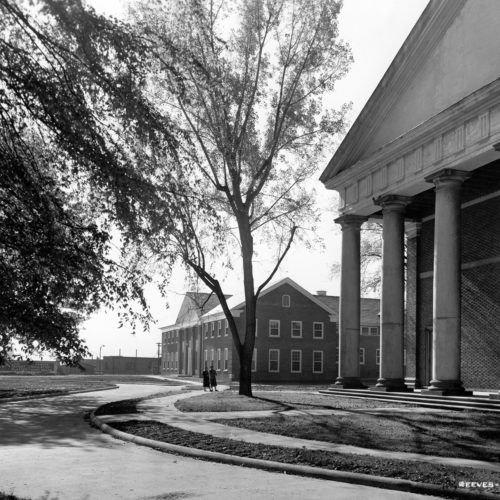
Brian McGowan, a professor who had taught at Grambling State University for fifteen years, conducted research at the Rockefeller Archive Center to trace the history of that Louisiana school. It is one of the many historically Black colleges and universities found throughout the US South. His report, “Grambling State University and Industrial Philanthropy,” traces the story of the transformation of Grambling from a trade school for African Americans in the segregated South to a modern university. At RAC, he looked at records documenting the early philanthropic support of the General Education Board (GEB) for the school. In his report, Prof. McGowan analyzes the motivations of northern philanthropists, who teamed up with local white Progressives in Louisiana government to further African American education. Yet, at the same time, they chose not to challenge the racial barriers created by Jim Crow governance that prevented economic (and social) advancement. His research at RAC was also an opportunity to review the personal papers of Leo Favrot, a GEB field agent based in Louisiana, who was actively engaged with that philanthropy’s funding of Grambling. It is important to note that the Favrot papers, although donated to the Rockefeller Foundation in 1967 (before the RAC was founded!) have been, till now, unused by researchers – so it is exciting to see them studied. Brian McGowan’s exploration of this collection points out how small collections of personal papers often provide special insights into historical events, not found in larger, institutional collections.
Brian McGowan is currently an assistant professor of US history at the University of Arkansas. His teaching and research interests include civil rights, African American history, the history of HBCUs, and digital humanities. He was a 2024 RAC research stipend recipient.
“Reimagining the Green Revolution for the Small Farmer: The Puebla Project, Mexico, 1967-1974” by Paul Vieth
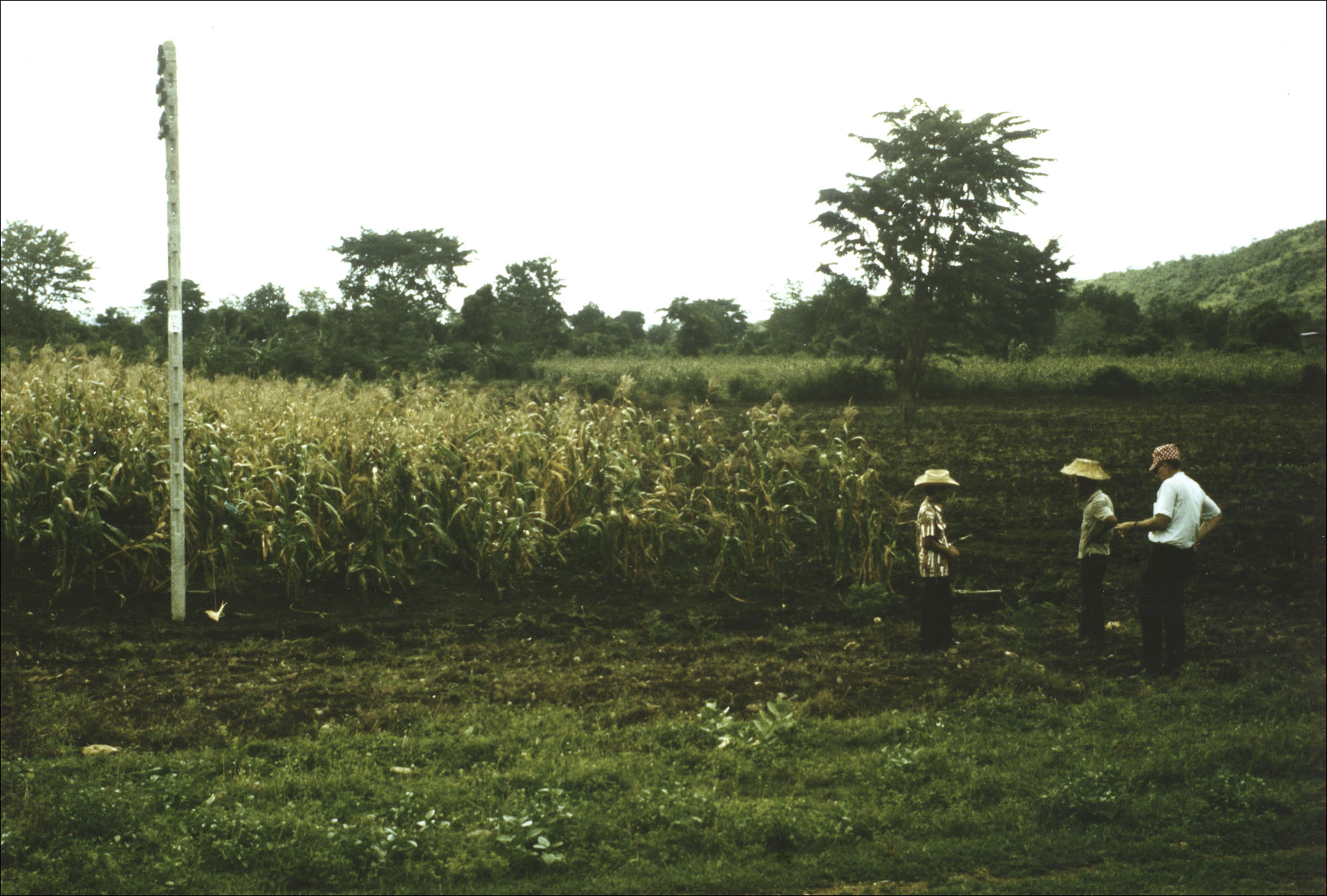
Paul Vieth came to RAC to look at our records related to the Green Revolution, the mid-twentieth century effort to increase the global food supply, for which Mexico was the initial laboratory for this agenda. His report, “Reimagining the Green Revolution for the Small Farmer: The Puebla Project, Mexico, 1967-1974,” analyzes attempts to address some of the profound agricultural, economic, and social impacts of these innovations on that country’s small-scale farming. Foundation officers, government officials and agricultural specialists came to realize that the Green Revolution, while increasing crop yields and infusing technological solutions for certain segments of Mexico’s agricultural economy, bypassed (and negatively affected) large portions of the country’s agrarian hinterlands. In response, they devised the Puebla Project as a means to find new ways to bring agricultural benefits to this sector. In his study at RAC of the Rockefeller Foundation’s Mexican Agricultural Program (MAP) records, and the records of CIMMYT (Centro Internacional de Mejoramiento de Maíz y Trigo), the institutional successor of MAP, Paul Vieth noted mixed results. There were inherent contradictions in the goals and methods of these efforts that entailed attempted to foster local, small-scale farming, while looking to technology- and scientific-driven high-yield food production. He frequently used the term “agri-cultures” to highlight the diverse assumptions and perspectives of different approaches to food economies and society that colored these efforts.
Paul Vieth is a doctoral student at the University of Oklahoma’s Department of History of Science, Technology, and Medicine. His research interests include 20th-century Latin American agricultural history and alternatives in sustainable agriculture. He was a 2024 RAC research stipend recipient. https://rockarch.issuelab.org/resource/reimagining-the-green-revolution-for-the-small-farmer-
“The Spatial Lives of Failed Ideas: Between Reindustrialization and Adaptation in the US Industrial Policy Debate” by Christopher Meulbroek
In his research report, “The Spatial Lives of Failed Ideas: Between Reindustrialization and Adaptation in the US Industrial Policy Debate,” Christopher Meulbroek surveys a variety of industrial policy ideas that circulated in government and public policy circles in the United States in the 1970s and 1980s. Using Nelson Rockefeller’s vice-presidential records, as well as the records of the Trilateral Commission, both at RAC, he notes that though these debates were about national policy, they grew from very specific, and often conflicting, local and regional needs. While creating national policies was anathema to classic free-market capitalism, the search for new comprehensive solutions for the country’s economic future stemmed from anxieties about America’s loss of competitiveness reflected in such indicators as lagging productivity growth and low investment in research and development. The researcher observes that the various industrial policy ideas being offered reflected often disparate regional economic concerns, and while they were elevated to a national level, these policies struggled to build sufficient coalitions to set a steady industrial agenda for the country over the long haul.
Christopher Meulbroek recently completed his dissertation in the University of British Columbia’s Department of Geography. His research interests include geographical political economy and critical development studies. He was a 2024 RAC research stipend recipient.
About the RAC Research Stipend Program
The Rockefeller Archive Center offers a competitive research stipend program that provides individuals up to $5,000 for reimbursement of travel and accommodation expenses. Learn more on our Research Stipend page.