We are sharing here the latest edition of our “New Research” series. It provides an opportunity to read the most recently published Rockefeller Archive Center research reports. These reports have been prepared by RAC stipend recipients who have conducted research in the archival materials that we preserve and make available to users from around the world. The reports showcase the wide range of collections that they have used, spanning different time periods and disciplines. These reports often highlight philanthropy’s impact around the world. This current set of reports reflects researchers’ study of records from the International Basic Economy Corporation, the William T. Grant Foundation, the Rockefeller Foundation, the Ford Foundation, the China Medical Board, the Population Council, and the General Education Board.
“‘Public Good through the Private Enterprise’: The Role of Agribusiness Corporate Actors in the Dez and Sao Francisco Valley Projects” by Antonio Ramon Buratti
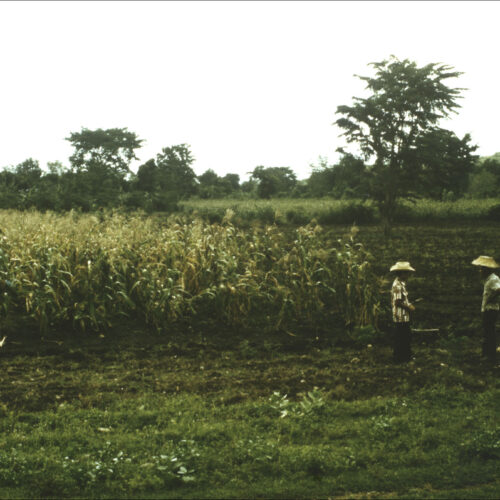
Antonio Ramon Buratti begins his report with a survey of the current state of scholarship about 20th-century international development projects. He points out that much has been written about the Cold War context of these programs, as well as how interest in developments in the social sciences regarding modernization theory has also shaped this scholarship. Many of these studies have concentrated on the role of various foreign policy elites, governmental experts, global institutions, and philanthropic actors, all of which participated in extensive programs in the “Third World.” Buratti’s visit to RAC provided an opportunity to study a different aspect of international development history: the role of private enterprise in these endeavors in the 1960s and 1970s. In “`Public Good through the Private Enterprise’: The Role of Agribusiness Corporate Actors in the Dez and Sao Francisco Valley Projects,” he looks at the work of the Development and Resource Corporation, the Agribusiness Council, and the International Basic Economy Corporation for their funding of projects in Iran and Brazil. By tracing the plans and projects of these entities in different geographic, political, and economic contexts, Buratti argues that, for a fuller picture of international development, understanding the role of for-profit organizations as intermediaries, consultants, and networks is essential.
Antonio Ramon Buratti is a graduate student in history at the Scuola Normale Superiore di Pisa with a particular interest in contemporary history. He was a 2025 RAC research stipend recipient.
“Granting Language: The William T. Grant Foundation and the Rebuilding of Primate Behavioral Psychology” by Max Fennell-Chametzky
In his research report, Max Fennell-Chametzky traces the history of primate language research. “Granting Language: The William T. Grant Foundation and the Rebuilding of Primate Behavioral Psychology” particularly focuses on the contributions made by that foundation to studies done in the 1960s and 1970s. One of the projects that his report discusses is the construction and staffing of the Stanford Outdoor Primate Facility. After it opened, Stanford scientists collaborated with famed British primatologist Jane Goodall. Through his exploration of the William T. Grant Foundation records, Fennell-Chametzky gained an understanding of the reasons behind that philanthropy’s decision to support research that might otherwise be considered as an “outlier” to its programmatic agenda. Not only did it fund primate language research in multiple academic settings, but its grant support also included (as exemplified by the Stanford project) the construction of environmentally appropriate facilities for primate living. The foundation hoped that this research on humanity’s closest relatives’ verbal communications would be “transferable” – that it could provide important insight into child development research. In this regard, the William T. Grant Foundation was particularly interested in supporting programs exploring how best to support special needs children, alongside another program goal to find new pathways for equitable youth outcomes. At the end of his report, Fennell-Chametzky observes that by the 1980s, primatology research had shifted away from ape language studies; nevertheless the later primate behavioral psychology research did ultimately benefit from the foundation’s “out of character” grantmaking of this era.
Max Fennell-Chametzky is a Ph.D. candidate in the Department of History of Stanford University. His research interests focus on the history of the behavioral and life sciences in the United States, France, and Britain from the 19th century to the present. He was a 2025 RAC research stipend recipient.
“The China Medical Board and the Development of Chinese Gerontology” by Sarah Rodriguez
China was among the first international settings for Rockefeller philanthropy in the early 20th century. To date, researchers have extensively studied the impact of the newly founded China Medical Board (CMB) in the development of medicine and medical education in China in the first half of the 20th century. Less heavily researched has been the role of the CMB in that country after the victory of the Communists in 1949, a political change that initially ended the organization’s presence in China. While CMB subsequently redirected its medical philanthropy to other countries in East Asia and Southeast Asia, it did not return to China until the post-Mao era. Sarah Rodriguez’s research interests center on this later period, and her time spent at RAC was an opportunity to explore unstudied chapters in CMB’s later engagement in China. Her research report, “The China Medical Board and the Development of Chinese Gerontology,” specifically looks at the philanthropy’s support for elder care research in China. She notes that CMB’s grants for aging and geriatric care in the 1990s and 2000s appeared at a critical juncture in Chinese history, as the country was recognizing the social, economic, and political impact of its increasingly elderly population.
Sarah Rodriguez is an associate professor of history at Emory University. Her research interests include the histories of modern China, gender and sexuality, and eugenics and population control. She was a 2024 RAC research stipend recipient.
“‘Plans Have Been Sent to 61 Broadway’: The General Education Board’s Architectural Vision for Black Education” by George Francis-Kelly
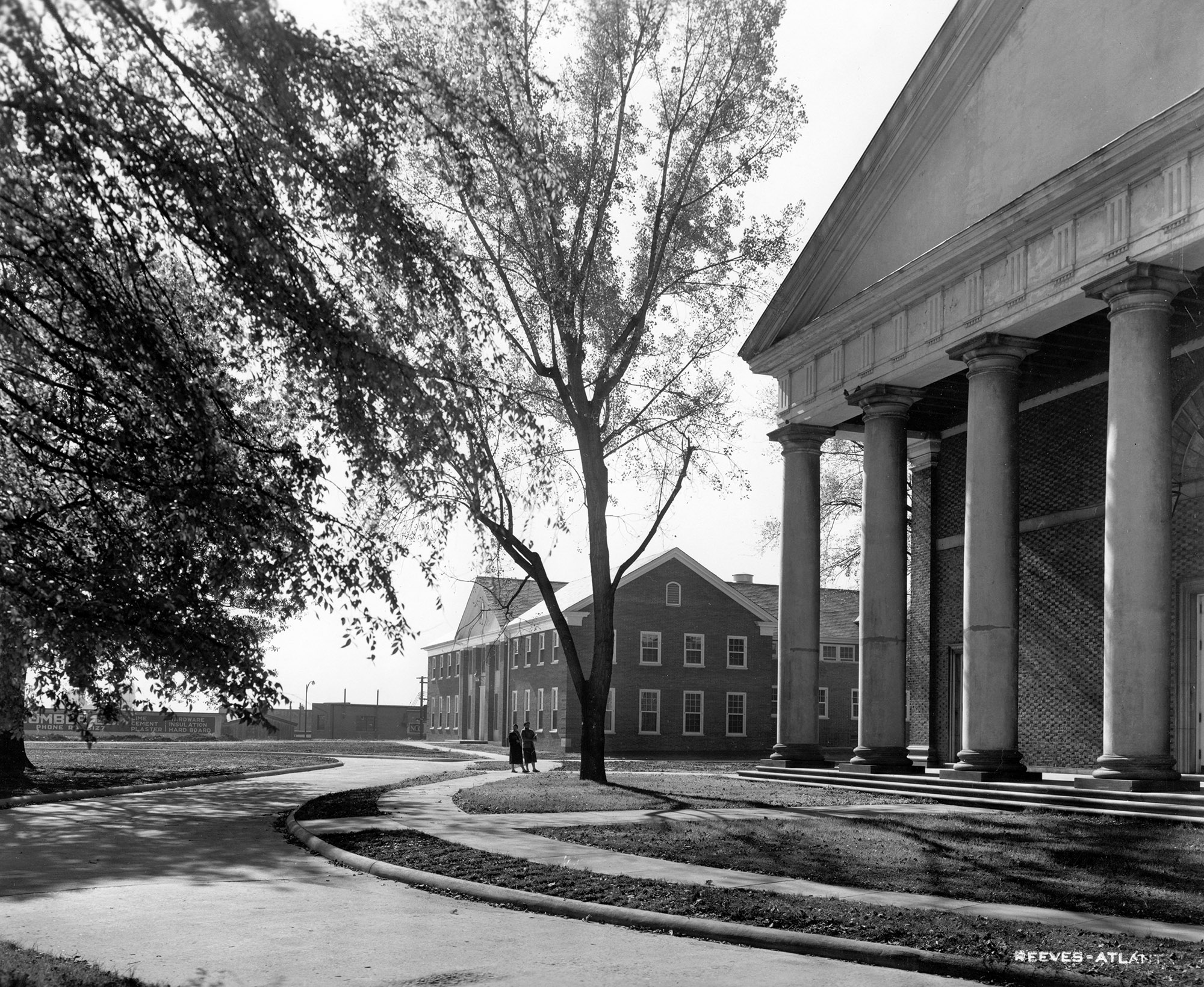
The General Education Board (GEB), established at the beginning of the 20th century by John D. Rockefeller, Sr., had a stated mission to support education in the United States “without distinction of race, sex, or creed.” An important part of the GEB’s agenda was to provide large grants to colleges and universities serving Black students in the segregated South. George Francis-Kelly’s research using the GEB records provided him with a chance to analyze an interesting aspect of these grants: college campus construction-related grants were conditional upon having architectural plans and blueprints sent to GEB staff for approval. In his report, “‘Plans Have Been Sent to 61 Broadway’: The General Education Board’s Architectural Vision for Black Education,” he notes that the grant files and correspondence provided revealing insight into campus architectural design and planning during the early decades of the century. However, these records also highlighted the racial dynamics between Black educational leadership and this northern philanthropy. By providing this funding to Historically Black Colleges and Universities (HBCUs), the GEB played a major role in shaping the lived, cultural experience of Black education. Dr. Francis-Kelly emphasizes, however, that the relationship was not simple. HCBU leaders’ vision not only encompassed educational goals for their institutions’ success, but positioned HCBUs as providing of vital community services, serving as cultural centers, and reflecting Black aspirations in a segregated landscape. Thus, the relationship between the GEB and the HBCUs frequently shifted and was reframed by different combinations of leadership skills, local conditions, architectural standards, and bureaucratic decision-making.
George Francis-Kelly is a post-doctoral researcher at the University College Dublin. He is working on a European Research Council project to consider the architecture of HBCUs across the twentieth century and explore how global networks shaped the production and uses of buildings on these campuses. Dr. Francis-Kelly was a 2024 RAC research stipend recipient.