We are sharing here the latest edition of our “New Research” series. It provides the public with an opportunity to read the most recently published Rockefeller Archive Center research reports. These reports have been prepared by RAC research stipend recipients who have come to our reading room to study the archival materials that we preserve and make available to users from around the world. The reports showcase the wide range of collections that they have seen, spanning different time periods and disciplines. As the heading above suggests, these reports often highlight philanthropy’s impact around the world. For this round of reports, researchers used the records of the International Education Board, the Office of the Messrs. Rockefeller, and the Rockefeller Foundation, as well as the papers of Laurance S. Rockefeller.
“Funding the Pacific: The Rockefeller Foundation and Trans-Pacific Scholarship in Hawai‘i, 1920s–1950s” by Bohan Zhang
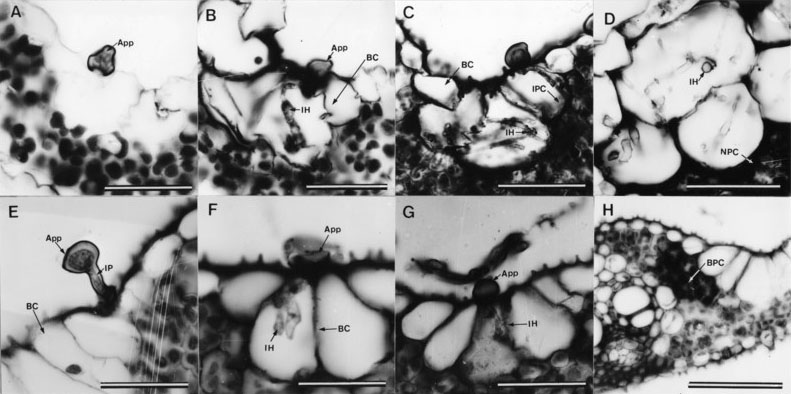
Bohan Zhang’s research on Hawaii’s role as a trans-Pacific hub of scholarship brought him to RAC to explore a number of our archival collections. Records of the International Education Board and the Rockefeller Foundation, as well as materials from the Rockefeller family archives’ Office of the Messrs. Rockefeller record group all proved useful for his study. In “Funding the Pacific: The Rockefeller Foundation and Trans-Pacific Scholarship in Hawai‘i, 1920s–1950s,” he analyzes three separate episodes in which pre-state Hawaii was uniquely positioned to further conversations and scholarship across that vast ocean. One of Bohan Zhang’s key takeaways from his research is that philanthropy played a central role in fostering these efforts which saw Hawaii as what he called “a laboratory and meeting ground” for trans-Pacific exchanges.
Bohan Zhang is a Ph.D. candidate in the Department of History of Rice University. His studies United States history with a particular focus on the Territory of Hawai‘i as a maritime borderland between the United States and East Asia. He was a 2025 RAC research stipend recipient.
“Coordinating Development: The Rice Improvement Program in Postcolonial India” by Sujeet George
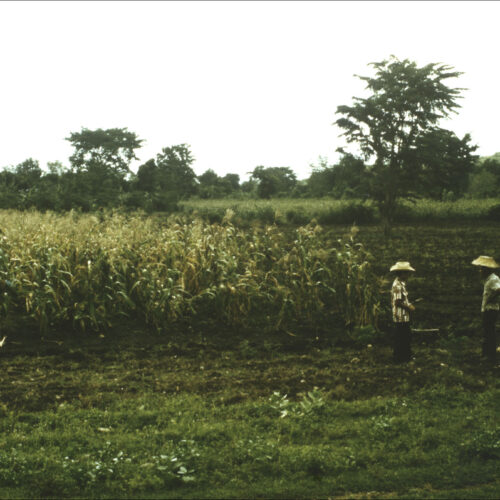
Sujeet George came to RAC to look at Rockefeller Foundation (RF)-related records on the Green Revolution. While much of the scholarship to date has focused on efforts to improve corn and wheat production in various countries, his interests are elsewhere – on the RF’s funding of rice research in India. To that end, the RF committed itself to the establishment of the All-India Coordinated Rice Improvement Program (AICRIP) in 1965. It brought together international rice scientists and Indian administrators in a collaborative effort to improve rice productivity in a county which, historically, had periods of food shortages and famines. From his research in the archives, Dr. George found contradictory impulses influencing AICRIP’s rice agenda. While it recognized diverse environmental circumstances and rice cultivation methods across wide areas of the Indian subcontinent, at the same time, it advocated for standardized high-yield varieties. Also, the program’s attention to farmers who could avail themselves of needed chemical fertilizers, pesticides, market credit, and irrigated water sidelined the majority of rice growers in India. He notes that, despite these inconsistencies, yields did increase. For the RF, AICRIP ultimately became a cooperative model that could be applied elsewhere. It worked across scales, incorporating regional centers, experimental stations, agricultural universities and thus was used for similar national programs in Ceylon, East Pakistan, and Indonesia.
Sujeet George is a historian of modern South Asia and a postdoctoral research fellow at the Max Weber Stiftung in New Delhi. His research centers on the intersections of agriculture, technology, the environment, and governance. He was a 2024 RAC research stipend recipient.
“The Rockefellers, Religion, and America’s National Parks” by Adam T. Hogan
In his research in various collections of Rockefeller family papers, Adam T. Hogan saw how the family’s conservation interests and religious interests converged in their support for the national parks. The focus of his report is on A Christian Ministry in the National Parks (ACMNP), originally founded as a product of mid-20th century ecumenical Protestantism. Its establishment was connected to the National Council of Churches, an ecumenical organization that had (along with its precursor, the Federal Council of Churches) major backing from John D. Rockefeller, Jr. Beginning in Yellowstone National Park, the work of the ACMNP expanded to other parks, providing religious services to visitors and staff. As Adam Hogan observed, John D. Rockefeller, Jr., Laurance S. Rockefeller, and Mary French Rockefeller all provided backing of ACMNP’s agenda and leadership, and in the case of the latter two, also became personally involved with the park ministry’s program. The work of the organization was viewed not only as a way to nurture spiritual guidance and uplift, but also to celebrate what it saw as the divine expression of the parks’ natural beauty.
Adam T. Hogan is a Ph.D. candidate in history at Texas Tech University, where he studies the history of religion, environment, and tourism in the United States. He was a 2025 RAC research stipend recipient.
“Science, Health Policy, and Philanthropy: The Creation of the Virus Laboratory of the Bacteriological Institute of the National Health Department of Argentina” by Juan Pablo Zabala
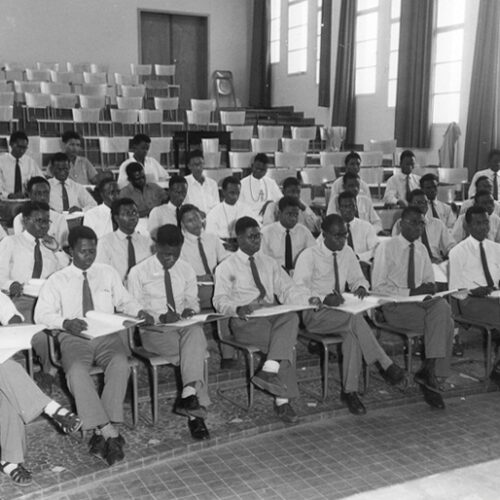
In “Science, Health Policy, and Philanthropy: The Creation of the Virus Laboratory of the Bacteriological Institute of the National Health Department of Argentina,” Juan Pablo Zabala provides insight into an interesting chapter in the history of the Rockefeller Foundation’s (RF) programs in that country. During the late 1930s and early 1940s, the RF played a critical role in the Virus Laboratory’s establishment and research priorities. The researcher noted that this engagement highlighted the ambitious global agenda of the RF’s International Health Division (IHD), efforts to professionalize Argentina’s Bacteriological Institute (the overseeing organization of the laboratory), and a new Argentine effort to shift public health research from bacterial diseases to viral ones. Through his extensive study of RF records at RAC, he also noted that the RF support of the Bacteriological Institute’s laboratory was short-lived. This was not a function of a lack of interest in the region; on the contrary, the RF established a regional office in Buenos Aires, called the Rio de la Plata and Andean regional office, which continued until 1949. Yet the end of support for the laboratory reflected tension between IHD goals for fostering a global viral research network and the national Argentine public health agenda, as well as ongoing domestic political instabilities in Argentina.
Juan Pablo Zabala is an independent researcher affiliated with the Consejo Nacional de Investigaciones Científicas y Técnicas in Argentina. His research interests include the sociology of science and medicine, focusing on the circulation of knowledge related to health issues. He was a 2025 RAC research stipend recipient.