We are sharing here the latest edition of our “New Research” series. It provides the public with an opportunity to read the most recently published RAC research reports. They have been prepared by RAC research stipend recipients who have come to our reading room to study the archival materials that we preserve and make available to users from around the world. These reports showcase the wide range of collections that they have used, spanning different time periods and disciplines. This edition’s set of reports reflects researchers’ use of the records from the Ford Foundation, the Population Council, and the Rockefeller Foundation. Also cited are the personal papers of Laurance S. Rockefeller.
“Re-envisioning Public Broadcasting: The Ford Foundation and the Public Broadcast Laboratory” by Allison Perlman
As television became a widespread new arena for entertainment and communication in the post-World War II era, a small number of US philanthropies became important proponents of fostering a public television variant of this new media. In her research report, Allison Perlman traces the history of one of these new projects, the Public Broadcast Laboratory (PBL). “Re-envisioning Public Broadcasting: The Ford Foundation and the Public Broadcast Laboratory” looks at what ultimately became a short-lived television experiment. It was conceived in 1967 as a way to demonstrate the potential of a nationwide interconnected public television service. The Ford Foundation records on the PBL revealed to Dr. Perlman that the rapid failure of this endeavor despite the large financial commitment by Ford was the result of a series of separate factors. It struggled with the very definition of the purpose (and politics) of public television. Also, some of its early leadership and supporters seem to have been more focused on the negative premise of its mission – to rebel against commercial television – than on ensuring the success of the laboratory itself. As such, the Public Broadcast Laboratory was disbanded within two years of its founding.
Allison Perlman is an associate professor for film, media studies, and history at the University of California, Irvine. Her research interests include history of broadcasting, American social movements, media law and policy, and media activism. She was a 2024 RAC research stipend recipient.
“Nesting Sacred Spaces: Demonstrations of Reverence for the Natural Landscape and Local History in the Mauna Kea Beach Hotel’s Architecture” by Olivia Armandroff
Olivia Armandroff’s research report, “Nesting Sacred Spaces: Demonstrations of Reverence for the Natural Landscape and Local History in the Mauna Kea Beach Hotel’s Architecture,” tells the story of Laurance S. Rockefeller’s 1960s RockResort project in Hawaii. The development of this hotel is viewed in this report in the context of Rockefeller’s entrepreneurial career, his advocacy of conservation initiatives, and his other projects in the state. Her report provides an architectural analysis on the attributes of the site, details regarding the construction of the hotel, and insight on the landscaping work surrounding the hotel. For example, the incorporation of native lava rock was not only for its attributes as a building and landscaping material, but to Rockefeller, it represented the essence of Hawaii. Following in-depth research in the Laurance S. Rockefeller papers at RAC, she observes that decisions about the resort’s design, including the adaptation of religious and cultural architectural traditions, reflected a set of ideas about Hawaii’s history during that early post-statehood moment that Rockefeller wanted visitors to his hotel to experience.
Olivia Armandroff is a doctoral candidate in the Department of Art History of the University of Southern California. Her research interests include twentieth-century American art and material culture. She was a 2024 research stipend recipient.
“Shifting the Narrative: Abortion Care and the Limits of Population Discourse in the 1970s” by Paula Orozco-Espinel
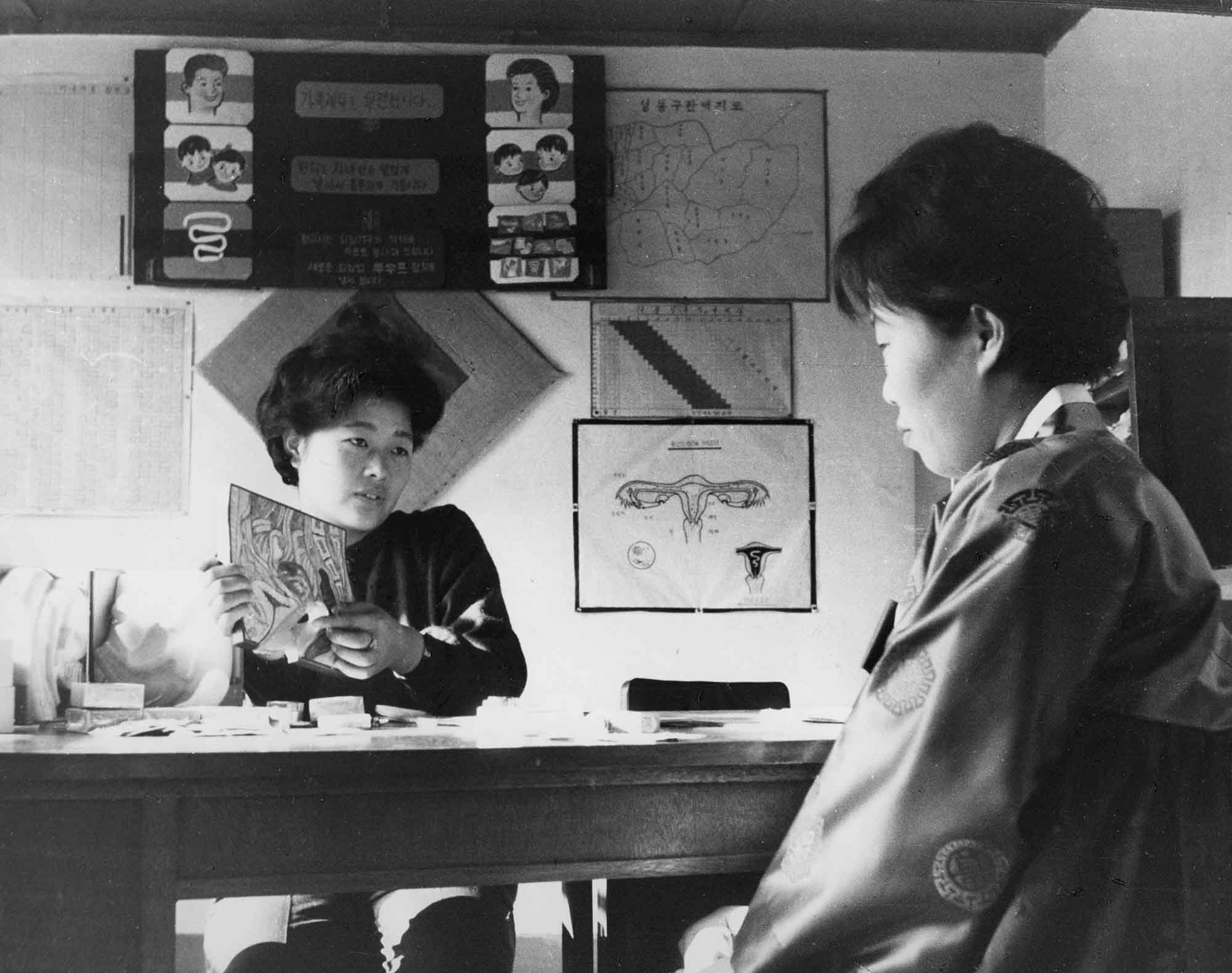
While researching in the records of the Population Council, Paula Orozco-Espinel was able to identify connections between abortion care in the 1970s and discussions within the professional population control establishment about the demographic crisis. In her report, “Shifting the Narrative: Abortion Care and the Limits of Population Discourse in the 1970s,” she traces the conversations that two abortion clinics, one in Washington, DC and the other in Bogotá, Colombia, had with the Population Council, seeking support for their work. These clinics were created in two very different settings to provide women with safe abortion services that were humane and easily accessible. Paula Orozco-Espinel notes that their founders were well-connected with population policy makers. (In fact, the founder of the DC clinic had worked for a time at the Population Council). Thus, in their requests for financial aid, they pragmatically co-opted the language of funders focused on solving the demographic crisis. At the same time, these clinic founders sought to avoid the racist undertones that pervaded much of the demographic population discourse of the era. From her study in the archives, the researcher observed that within the population establishment itself, the response to the funding requests provided clear evidence of differing visions on the goals and methods for dealing with the population crisis. Ultimately, these tensions would continue to grow as global responses to the “demographic time bomb” were being reconsidered in subsequent decades.
Paula Orozco-Espinel is a doctoral candidate in the Department of History at the University of Pittsburgh. Her research interests center on the history of women and sexuality in Latin America and the United States. She was a 2023 RAC research stipend recipient.
“From Experiment to Institution: The Rockefeller Foundation’s Role in Shaping Public Health in Colonial India” by Sandip Kana
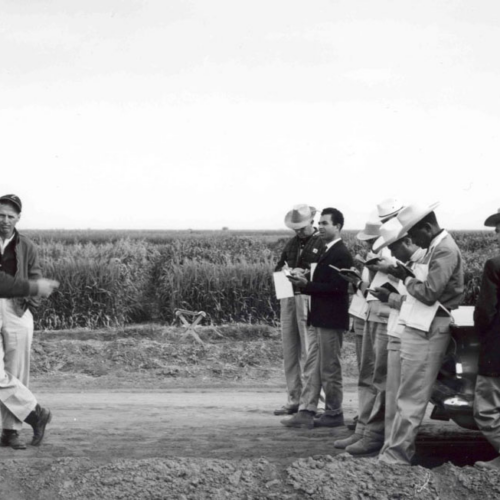
In his report, “From Experiment to Institution: The Rockefeller Foundation’s Role in Shaping Public Health in Colonial India,” Sandip Kana takes a fresh look at the work of the Rockefeller Foundation (RF) supporting public health in colonial-era India. Over the past five decades, a number of researchers have come to RAC to study the RF’s grantmaking on health and medicine in India, but this researcher is looking at one particular program from a different perspective. His overall interest in the work of non-state actors involved with Indian health programs and policies after independence led him to trace a set of RF antecedents – its support for a program in the 1930s establishing health units in the Indian countryside. He notes that the 1919 Government of India Act had transferred the responsibility (and burden) of health administration to the provinces, which had very limited resources to fund medical care, public health initiatives, and medical education. The situation in impoverished rural areas was particularly dire where there was only one doctor per 25,000 residents. As a result, the RF’s initiative to support the establishment of a series of health units, along with health leagues founded for and run by local villagers, created a new focus on fostering health for the agrarian population. Sandip Kana argues that this dynamic continued after independence, in which the Rockefeller Foundation, alongside other international actors, engaged with wide-ranging community development programs in the country.
Sandip Kana recently completed his dissertation in history at King’s College London and is presently a graduate research assistant at the London School of Economics and Political Science. His research interests include the histories of non-state actors, the state, and development in colonial and postcolonial India. He was a 2024 RAC research stipend recipient.
About the RAC Research Stipend Program
The Rockefeller Archive Center offers a competitive research stipend program that provides individuals up to $5,000 for reimbursement of travel and accommodation expenses. Learn more on our Research Stipend page.