Our “New Research” series is a round-up of recent RAC research-related publications. Available here are newly published RAC Research Reports submitted by RAC travel stipend recipients who come to our reading room to study the records that we preserve and make available or research. These reports showcase the wide range of collections that they have used, spanning different time periods and disciplines. This edition especially highlights the global nature of our archives. The reports cite records from the Ford Foundation, the Rockefeller Foundation, the Trust for Mutual Understanding, the Rockefeller Brothers Fund, and the Office of the Messrs. Rockefeller, as well as from the papers of John D. Rockefeller 3rd and Edgar B. Young.
“Transnational Networks in the Constitution of Latin American Sites of Conscience: The Role of Philanthropic Foundations” by Rebeca Lopes Cabral
Rebeca Lopes Cabral traveled to RAC from Brazil to study records related to sites of conscience –memory sites and museums –dedicated to preserving the struggle for human rights. Her report, “Transnational Networks in the Constitution of Latin American Sites of Conscience: The Role of Philanthropic Foundations,” highlights the work of foundations, particularly the Ford Foundation, in supporting human rights memory projects in Latin America, as well as in fostering larger global network of institutions and activists. She found records in our archives indicating that in the late 1970s, the Ford Foundation’s Andes and Southern Cone Office was becoming increasingly engaged with human rights and democracy initiatives in Latin America.
Central to the work of many of the human rights activities there were efforts to document and preserve evidence of human rights abuses. Ford’s support for these endeavors expanded as it fostered the International Coalition of Sites of Conscience (ICSC). One of the coalition’s founding members was Memoria Abierta in Argentina, an organization that started as a grassroots campaign to document information about family members who were “disappeared” during that country’s military dictatorship. RAC’s records on both the ICSC and Memoria Abierta reveal important details about the development and professionalization of these organizations that, as Rebeca Lopes Cabral notes, will be valuable for her ongoing doctoral research.
Rebeca Lopes Cabral is a Ph.D. candidate in the Faculty of Architecture and Urban Planning at the Universidade de São Paulo. Her research focuses on the relationships between memories of violence and spaces, particularly on the memorials related to Latin American dictatorships. She was a 2023 RAC research stipend recipient.
“Making the Arid Lands Green: The History of the Ford Foundation’s Agricultural Program in the Middle East, 1968-1977” by Sarah Saad Alajmi
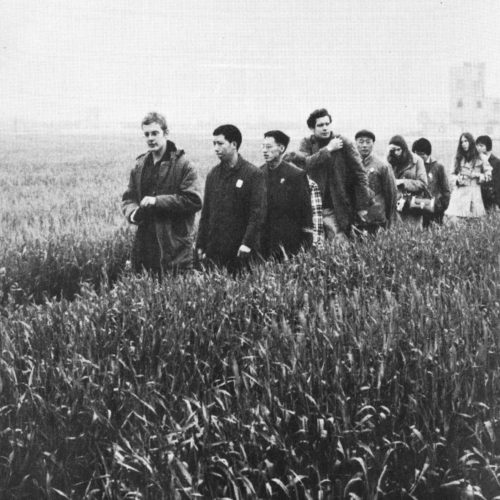
In “Making the Arid Lands Green: The History of the Ford Foundation’s Agricultural Program in the Middle East, 1968-1977,” Sarah Saad Alajmi provides insight into philanthropic efforts to expand food production in the Middle East. In the 1960s, the Ford Foundation already had a presence in the region, with offices both in Cairo and Beirut, as well as a large portfolio of projects in different fields. Its Arid Lands Agricultural Development (ALAD) program was envisioned as a nation-based initiative, working with countries as far flung as Morocco, Iran, South Yemen, and Ethiopia. As Alajmi notes, the program, though headquartered at Lebanon’s Agricultural Research Institute, was actually conceived as a platform to engage with different national research programs, their researchers, and local governments.
Focusing primarily on wheat, a staple of the region, ALAD sought to foster integration of new technologies to local arid conditions, provide support for countries’ research agendas, and enhance connections with international programs. The structure of the ALAD program in some ways points to the Ford Foundation’s flexibility in the 1960s in its approach to agriculture. Yet overall it remained deeply committed to a vision of supporting agriculture growth on a global scale through international research centers. In the end, the story of ALAD was relatively short; after less than a decade of activity the Ford Foundation opted to pivot to its already-tested agenda of supporting those international research centers. ALAD ceased operations in 1976 and its staff was transferred to the International Center for Agricultural Research in the Dry Areas (ICARDA) in 1977.
Sarah Saad Alajmi is a Ph.D. candidate in the History and Theory of Architecture at the University of Pennsylvania. Her dissertation examines the interrelationship between architecture and ecology in Saudi Arabia in the 20th century. She was a 2023 RAC research stipend recipient.
“Granting Movement: The Impact of Cultural Philanthropy on African American Concert Dance in the 1960s and 1970s” by Emily Hawk
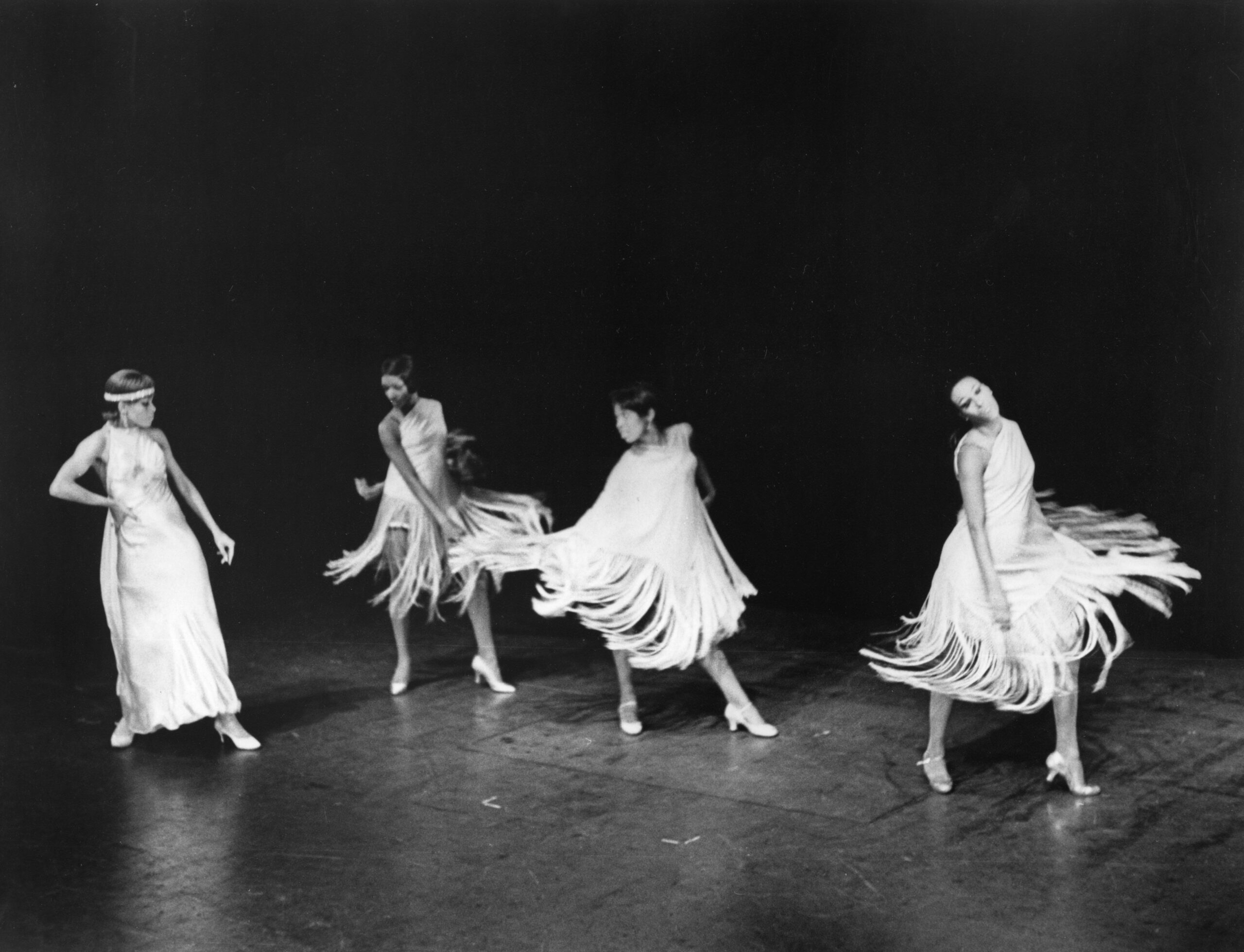
Emily Hawk’s research report, “Granting Movement: The Impact of Cultural Philanthropy on African American Concert Dance in the 1960s and 1970s,” traces foundation support for Black performing arts organizations during the “dance boom” era. At RAC, she looked at funding provided by the Ford Foundation and the Rockefeller Brothers Fund to Carole Johnson, the founder of the Modern Organization for Dance Evolvement, and to Alvin Ailey, the founder of the eponymous Alvin Ailey American Dance Theater.
Hawk observes that these grantees successfully leveraged relatively modest foundation support to propel both their artistic and civic missions. Her exploration of the archives of these foundations also highlighted the value of grant application records. As she observed, they fill a gap in the historical record on African American cultural organizations. These applications provide insight not only regarding the plans and creative visions of the applicants, but to the organizations’ finances and performance schedules –aspects of African American endeavors in the arts that have limited documentation in other archival repositories.
Emily Hawk is pursuing her doctoral studies in the Department of History at Columbia University. Her research interests center on modern dance history, with a particular focus on race, cultural identity, and civic engagement. She was a 2023 RAC research stipend recipient.
“Framed by Lincoln Center: Designing Postwar American Performing Art Centers” By Sarah Horowitz
Sarah Horowitz’s report on Lincoln Center, “Framed by Lincoln Center: Designing Postwar American Performing Art Centers,” presents the story of this cultural icon of New York City from a different angle. She points out that while Lincoln Center has captured the interest of many scholars, much of their focus has been on what she terms as “the project’s relationship to postwar American urban renewal or the achievements of the civic and political leaders who made the Lincoln Center concept a reality.” Instead, after studying records in a wide range of RAC collections, Horowitz’s report highlights the center’s place in architectural history. She notes that the planning and construction of Lincoln Center occurred in the midst of a postwar performing arts center boom in America.
Large cities’ leaders saw these projects as potentially transformational; they were viewed as essential components of elevating a city’s status as a major cultural center. Sarah Horowitz observes that this building boom peaked in the 1960s with a long list of new venues created, including not only Lincoln Center but also the Kennedy Center for the Performing Arts in Washington, DC, among others.
Sarah Horowitz is a Ph.D. candidate in the Department of History of Art and Architecture at Boston University. Her research interests focus on the development of performing art centers in the context of the history of modern architecture and urbanism. She was a 2023 RAC research stipend recipient.
About the RAC Research Stipend Program
The Rockefeller Archive Center offers a competitive research stipend program that provides individuals up to $5,000 for reimbursement of travel and accommodation expenses. Learn more on our Research Stipend page.