“My body was shaking uncontrollably, my teeth were chattering,” remembered Nathan Leopold. “You think from moment to moment that your head is going to split, and you wish to gosh it would!”Nathan Freudenthal Leopold, Life Plus 99 Years (Greenwood Press, 1974), 321.
Describing the viciousness of the malaria with which he was purposely infected in the 1940s, Leopold experienced a headache “unlike any…in the world.” A 105-degree temperature sustained “for five days continuously. He suffered two heart attacks as a prisoner-subject at Stateville Penitentiary in Illinois.Nathan Freudenthal Leopold, Life Plus 99 Years (Greenwood Press, 1974), 321.

Continuing to be the subject of bioethical debates concerning race and informed consent alongside the Tuskegee Syphilis Study, the Stateville Malaria Study also represents the beginning of “the modern science of precision medicine, with its goal of delivering the right treatment, to the right patient, at the right time.”Hannah Allen and James Tabery, “The Black Prisoners of Stateville: Race, Research, and Reckoning at the Dawn of Precision Medicine,” JAMA, published online June 11, 2025.
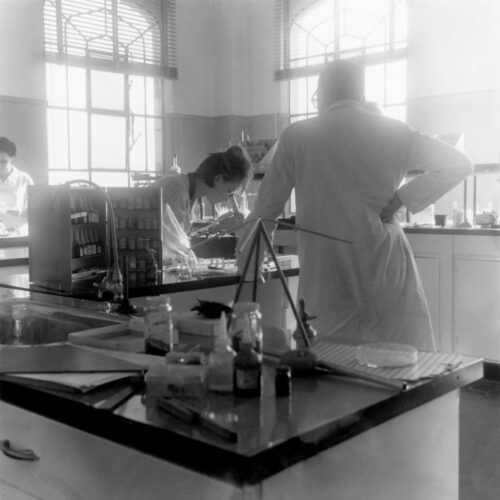
Less known is the prehistory of this confounding and controversial program, which began in the International Health Division (IHD) laboratories of the Rockefeller Foundation (RF).
Public Health is Only Part of the Story
The Rockefeller Foundation’s medical programs that positively contributed to global health are well-documented. Historians highlight the RF’s “dramatic successes” during the first half of the twentieth century. The Foundation’s “grants and initiative… eliminated pellagra, hookworm, typhoid, yellow fever, malaria, and numerous other physical ailments which had throughout history damaged and shortened life.”Barry D. Karl and Stanley N. Katz, “The American Private Philanthropic Foundation and the Public Sphere, 1890-1930,” Minerva 19, no. 2 (June 1981): 236-70.
But this is only part of the story.
Still underexamined are Rockefeller Foundation research initiatives – such as that conducted at the foundation’s malaria research station in Tallahassee, FL between 1931 to1940 – which set American medicine on the less-beneficial trajectory of human experimentation and hurtling toward the bioethical and racialized conundrum at Stateville.

Professionalized Psychiatry & Philanthropic Intervention
For better or worse, we would not have psychiatry today without the Rockefeller Foundation.Danielle Carr, “Medicalizing Society,” Jacobin, August 28, 2018. As Teresa Iacobelli illustrates, the RF played a key role in the professionalization and medicalization of American psychiatry beginning in the 1930s. Foundation grants aimed to improve psychiatric education in medical schools, build psychiatric research facilities, and support individuals’ research initiatives and advanced training.
The evangelical zeal with which the RF approached the development of public health measures and medical practice was also directed toward the professionalization of psychiatry. Contributions to the “lay understanding of psychiatry and… its explicit scientific development,” as RF President (1936-1948) Raymond Fosdick recollected in The Story of the Rockefeller Foundation (1952), sought to cure social ills just as other successful RF programs cured physical ills. He continued:
Fear, hate, guilt, and aggressiveness, so clearly demonstrated by the disintegrated personality, are the same forces which bring about the disintegration of human society…Psychiatry is a tool of evolving importance in building a new kind of stability in human society.Raymond Blaine Fosdick, The Story of the Rockefeller Foundation (New York: Harper, 1952), 133.
The malaria therapy program arrived at a moment when psychiatry shifted from the custodial warehousing of non-socially-conforming individuals into a medical specialty centering on biological approaches to the causes and cures of mental illness. As anthropologist and historian Danielle Carr shows, “philanthropist industrialists provided psychiatrists with the massive infusions of funding necessary to institutionalize the discipline. The unifying goal, suiting all of these parties, was to reframe social and political problems as a question of biomedical disease, best managed by…psychiatrists.”Danielle Carr, “Medicalizing Society.” Jacobin, August 28, 2018.
Rockefeller Foundation dollars – aimed at laboratory-centric experimentation – spurred on much of this shift and legitimized the psychiatric specialty in the eyes of the public, at least for a time.
Disease as Therapy: Mark Frederick Boyd and Malaria Research
The ordeals described by patient Nathan Leopold were not unlike those experienced by earlier patients during the development of a malaria therapeutic for neurosyphilis. Dr. Mark Frederick Boyd led those at Florida State Hospital, a psychiatric institution in Tallahassee, within a framework of disease as therapy.Nathaniel Comfort, “The Prisoner as Model Organism: Malaria Research at Stateville Penitentiary,” Studies in History and Philosophy of Science Part C: Studies in History and Philosophy of Biological and Biomedical Sciences 40, no. 3 (2009): 190–203.

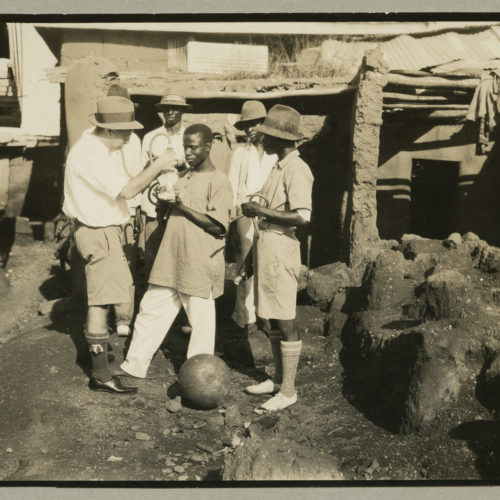
While European physicians led the initial surge of malaria fever therapy research, the RF sought to keep pace through Boyd. He was “a distinguished malariologist in the Health Division” of the foundation since the earliest years of malaria-related interventions in the American South immediately following World War I.John Farley, To Cast Out Disease: A History of the International Health Division of the Rockefeller Foundation(1913-1951) (Oxford: Oxford University Press, 2004), 162.
See Also, Margaret Humphreys, “Whose body? Which disease? Studying Malaria while Treating Neurosyphilis,” in Useful Bodies: Humans in the Service of Medical Science in the Twentieth Century (Baltimore: Johns Hopkins University Press, 2004), 53-77.Boyd was a valued member of the International Health Division staff for over twenty years (1921-1946). He served in Brazil, Jamaica, Sardinia and at various locations across the southern United States.
Becoming the global thought leader in the area of malaria fever therapy fit a shift in IHD’s focus. Beginning in the 1920s under the direction of Frederick Russell (1923-1935) and Wilbur Sawyer (1935-1944), the IHD moved from public health centered prevention toward “a greater research mandate”.Teresa Iacobelli, “The Rockefeller Foundation’s 20th-Century Global Fight Against Disease,” RE:source, Rockefeller Archive Center.In fact, the malaria fever therapy laboratory in Florida was the first which “fulfilled Russell’s demand for a ‘spirit of inquiry and desire to increase knowledge.’”Farley, To Cast Out Disease: A History of the International Health Division of the Rockefeller Foundation(1913-1951) (Oxford: Oxford University Press, 2004),163.

The International Health Division of the Rockefeller Foundation
Throughout the period of the studies in question here, the International Health Division’s budget was never less than twenty nor more than thirty percent of the RF’s total allocation across five divisions.Farley, To Cast Out Disease: A History of the International Health Division of the Rockefeller Foundation(1913-1951) (Oxford: Oxford University Press, 2004), 165.
The IHD’s budget itself was distributed across seven sectors. Those were: Diseases, Administration, Health Education, Fellowships, Health Units, Laboratories, and Health Commission. Over the nine years of malaria fever therapy research, the total RF allocation to that activity never exceeded $18,050 ($412,312 today) – less than one percent of the over $2 million research budget of the Diseases sector alone.Farley, To Cast Out Disease: A History of the International Health Division of the Rockefeller Foundation(1913-1951) (Oxford: Oxford University Press, 2004), 20.
Table: Rockefeller Foundation Allocation for Malaria Therapy Research
The data in this table was culled – by the author – from RF Annual Reports.
| Year | Malaria Therapy Research | Total IHD Designation | Percent of IHD |
| 1931 | $13,500.00 | $2,702,756.61 | 0.0049949 |
| 1932 | $17,000.00 | $2,725,346.08 | 0.00623774 |
| 1933 | $12,000.00 | $2,528,553.90 | 0.004745796 |
| 1934 | $10,000.00 | $2,198,911.58 | 0.004547704 |
| 1935 | $10,000.00 | $2,191,782.27 | 0.004562497 |
| 1936 | $11,000.00 | $2,099,016.00 | 0.005240551 |
| 1937 | $13,614.00 | $2,100,000.00 | 0.006482857 |
| 1938 | $14,800.00 | $2,197,210.00 | 0.006735815 |
| 1939 | $14,800.00 | $2,200,000.00 | 0.006727273 |
| 1940 | $18,050.00 | $1,989,410.00 | 0.009073042 |
Race and the Development of American Public Health
But despite the fact that much more budgetary power was allocated elsewhere – especially, to hookworm, yellow fever, and tuberculosis initiatives – funding for the Station for Malaria Research offers an outsized window into the racialized nature of the development of American public health.

Within the global history of psychiatry, malaria fever therapy represents yet another example among a long list of troubling somatic interventions eventually rendered obsolete such as restraints, lobotomy, and some forms of electroshock therapy (among others).Andrew Scull, Desperate Remedies: Psychiatry’s Turbulent Quest to Cure Mental Illness (Cambridge, MA: Harvard University Press, 2022), xiv.In the Rockefeller Foundation’s quest to lead the development of a therapeutic to treat neurosyphilis, Boyd, in collaboration with psychiatric administrators in Florida and New York, exposed vulnerable syphilitic patients to thousands of mosquito bites and excruciating fevers. Some patients died.
These practices influenced the creation of a United States Public Health Service (PHS) laboratory in South Carolina, culminating in Stateville.Bruce Mayne and Martin Dunaway Young, “The Technic of Induced Malaria as Used in the South Carolina State Hospital,” in Venereal Disease Information 22, United States Public Health Service (1941), 271-276.
Race & Patient Vulnerability in the Early 20th Century
During this period, African American medical issues often sprang from impoverished conditions, as disease and poverty were inextricably linked in communities across the country. This was true most especially in the South. While the linkages between race, class, and illness have been well known to scholars since the early twentieth century, more recently historians of race and medicine, notably Alondra Nelson, show that within these troubling socio-medical conditions, “poor Blacks were not only medically underserved but also overexposed to the worst jeopardies of medical practice and bio-scientific research.”Alondra Nelson, Body and Soul: The Black Panther Party and the Fight against Medical Discrimination (Minneapolis: University of Minnesota Press, 2011), xii-xiii. On top of this, African Americans “utilized public hospitals and clinics to a greater degree than Whites.” These vulnerable patients “were at risk of being used for surgical practice, risky experimental procedures, and eugenically oriented surgery” while confined to southern psychiatric institutions such as the Florida State Hospital.W. Michael Byrd and Linda A. Clayton, An American Health Dilemma: Race, Medicine, and Health Care in the United States 1900–2000 (New York: Routledge, 2001), 45 and 290.

African-American Test Subjects
Harriet Washington, a historian of medicine, compares the Rockefeller Foundation’s malaria therapy program to the Tuskegee Syphilis Study, calling it “worse than allowing black men with syphilis to die…[it killed] black syphilitics outright in order to test a theory of treatment.”Harriet Washington, Medical Apartheid: the Dark History of Medical Experimentation on Black Americans from Colonial Times to the Present, (New York: Doubleday, 2006), 218. To be sure, both Black and white patients were part of the experimentation. Yet, as researchers constantly tested immunity to the most aggressive forms of malaria, more mosquito bites, and more prolonged exposure to the high temperatures, the program illuminates a pervasive scientific racism deeming African Americans more susceptible to certain diseases and more tolerant of pain.
Social Factors Affecting Patients
Susceptible to disease because of poor nutrition and economic conditions, the patients involved in the malaria therapy program were also undereducated. With poverty came a lack of education. They were unequipped to negotiate with physicians within the coercive environment of the psychiatric clinic.
With a focus on malaria fever therapy under Boyd’s direction, what follows examines Boyd’s publications from the American Journal of Tropical Medicine and the American Journal of Psychiatry and inter-RF correspondence files containing unpublished articles yet analyzed in the historical record from the Rockefeller Archive Center.For the unpublished papers, see Boyd, “Mosquito vs Blood Inoculations in the Practice of Inducing Malaria,” 1933; and RAC, Boyd “suggestions for the management of autochthonous malaria derived from observations on the naturally induced disease,” 1938. Rockefeller Foundation records; International Health Board/Division records – RG 5; Rockefeller Institute Virus Laboratories – Series 4; Rockefeller Archive Center.As such, this piece centers on three questions.
- What was Boyd’s perspective on disease, race, and medicine?
- How did race factor into the types of experiments conducted?
- What differences were apparent in treating Black and white patients during the testing?
The Rockefeller Foundation’s Motivation for Funding Psychiatric Experimentation

The International Health Division’s malaria therapy program arrived within a socio-political climate viewing psychiatry as a scientific way of explaining and curing social issues.
“Desperate to camouflage the real causes of widespread social despair,” writes historian Danielle Carr, “elites turned to the promise of psychiatry to disseminate a supposedly apolitical scientific expertise.”Danielle Carr, “Medicalizing Society,” Jacobin, August 28, 2018.The Rockefeller Foundation believed “psychiatry, and its central paradigm of adjustment, would be the best wager for disseminating a new common sense… [and] could build social harmony and stave off working-class discontent.”
Just as inter-war Americans distrusted medicine — as the 1910 Flexner report described — so too were citizens wary of psychiatry. The emphasis given to the Flexner report for instigating changes to American medical education in the 1930s is similar to the emphasis given to Albert Deutsch’s series of articles for the New York Post and subsequent book The Shame of the States (1948) for spurring psychiatric reform several years later.
The Rockefeller Foundation’s Quest to Legitimize Psychiatry
Just as the Rockefeller Foundation aided the professionalization and global expansion of laboratory medicine, so did the RF seek to legitimize psychiatry through the application of science. Somatic treatments, such as malaria fever therapy, represented a shining opportunity within this new scientification of psychiatry.
Working at the confluence of mental and somatic medicine, the Rockefeller Foundation intended to “infuse medicine with psychiatry, to help make this discipline a headland of medicine, instead of an isolated island of speculations and terminologies.”Raymond Fosdick, The Story of the Rockefeller Foundation, 129.The strategy was similar to that of laboratory medicine – “one, the development of good teaching in a few medical schools with the integration of psychiatry into the regular curriculum; and two, the support of scientific research.”Raymond Fosdick, The Story of the Rockefeller Foundation, 130.Fosdick explains that:
Our tragic lack of knowledge in this backward field may be deduced from the economic, moral, social, and spiritual losses occasioned by the feeble-minded, the delinquents, the criminally insane, the emotionally unstable, the psychopathic personalities, and – less dramatic but far more widespread – the preventable anxieties, phobias, tantrums, complexes, and anomalous or unbalanced behavior of otherwise normal human beings.
Raymond Fosdick, The Story of the Rockefeller Foundation, 128-129.
The “Promise” of Malarial Fevers as a Cure
In the 1930s, the Rockefeller Foundation’s focus shifted from supporting medical education to “extending the boundaries of knowledge.” This, through the support of more experimental programs, enabling physicians to develop “new adventurous” techniques, as Fosdick remembered.Raymond Fosdick, The Story of the Rockefeller Foundation, 124.
Malaria therapy – inducing malaria fevers as a cure for neurosyphilis – represents a rare scenario in which one disease is used to cure another. Patients with syphilis had been a feature of mental institutions since the inception of such institutions in France in the nineteenth century. In her 2001 study of malaria, historian of medicine Margaret Humphreys shows that “in the 1910s physicians began to note the odd fact that symptoms of neurosyphilis, such as dementia and partial paralysis, improved after the patient suffered from another disease that generated high fevers.”Margaret Humphreys, Malaria: Poverty, Race, and Public Health in the United States (Baltimore: Johns Hopkins University Press, 2003), 49.Its utility was codified when Austrian psychiatrist Julius Wagner-Jauregg won the Nobel Prize in 1927 for inventing malaria fever therapy.
“There can be no doubt,” writes Humphreys, “that from 1920 to 1945, malaria therapy for neurosyphilis represented the best that medical science had to offer.”Margaret Humphreys, “Whose body? Which disease? Studying Malaria while Treating Neurosyphilis,” in Useful Bodies: Humans in the Service of Medical Science in the Twentieth Century (Baltimore: Johns Hopkins University Press, 2004), 53-77.
Testing Malaria Fever Therapy
Beginning in 1922, physicians at St. Elizabeths Hospital in Washington, D.C., were the first Americans to test malaria fever therapy.Matthew Gambino, “Fevered Decisions: Race, Ethics, and Clinical Vulnerability in the Malarial Treatment of Neurosyphilis, 1922–1953,” Hastings Center Report 45, no. 4 (2015): 39-50. Yet while “physicians in England had already infected thousands of neurosyphilis patients by means of ‘loaded’ mosquitoes by 1930,” writes Humphreys, “no Americans were engaged in similar practices.”Margaret Humphreys, “Whose body?Which disease? Studying Malaria while Treating Neurosyphilis,” in Useful Bodies: Humans in the Service of Medical Science in the Twentieth Century(Baltimore: Johns Hopkins University Press, 2004), 53-77.
No doubt spurred on by Warner-Jauregg’s Nobel Prize in 1927, the RF “decided to remedy this defect,” and sent Boyd to Florida in the spring of 1931 to establish the Station for Malaria Research.Margaret Humphreys, “Whose body? Which disease? Studying Malaria while Treating Neurosyphilis,” in Useful Bodies: Humans in the Service of Medical Science in the Twentieth Century (Baltimore: Johns Hopkins University Press, 2004), 53-77.
There can be no doubt that from 1920 to 1945, malaria therapy for neurosyphilis represented the best that medical science had to offer.
Margaret Humphreys, Historian of Medicine
Administrating the Malaria Experiments to Psychiatric Patients

At the Rockefeller Foundation virus lab at the Rockefeller Institute in New York, Dr. Mark F. Boyd reported directly to Frederick Russell and Wilbur A. Sawyer, Directors of the International Health Division. After two years of testing on syphilitic patients in the Florida State Hospital and developing methods for cultivating malaria for therapeutics, Boyd sought access to patients closer to the Institute in New York, where his colleague, Warren K. Stratman-Thomas, could replicate practices.
Viewed as a win-win arrangement for the Rockefeller Foundation and for patients receiving free access to the cutting-edge treatment, the International Health Division selected Manhattan State Hospital on Ward’s Island, a psychiatric hospital.
Beginning in 1934, the IHD’s initiative, as designed and administered by Boyd, involved concurrent testing at Florida State Hospital and Manhattan State Hospital. Each of these psychiatric institutions afforded Boyd’s team access to patients with neurosyphilis while Boyd provided therapeutic matter in the form of malarial blood and malarial mosquitoes and expertise in administering and tracking the infections. With Boyd primarily based at the Station for Malaria Research in Florida, where an insectary was constructed, the program ran as such for the next six years.
Malaria Experimentation on Neurosyphilis Patients
Above all, Boyd wanted to experiment with malaria whilst treating patients for neurosyphilis. The overarching goal of his laboratories was to establish the “fundamentals of the disease [malaria], both in man and experimental animals,” as Karen Masterson argues.Boyd, “Malarial Problems Under Investigation,” December 15, 1937. Boyd, Mark F. (Malaria), 1933-1942. Rockefeller Foundation records; International Health Board/Division records – RG 5; Rockefeller Institute Virus Laboratories – Series 4; Rockefeller Archive Center. Karen M. Masterson, The Malaria Project: The US Government’s Secret Mission to Find a Miracle Cure. New York: New American Library, 2014.
According to one of his unpublished papers, Boyd thus took responsibility for developing a process for administering “the symptoms of the immediate [malarial] attack as rapidly as is consistent with the general welfare of the patient and the attainment” of effective therapy. While doing so, he wanted to “minimize the likelihood that the patients will experience recurrence” of malaria after the treatment concluded and to leave patients not only cured, but “innocuous as a source of infection” upon returning to the general population of the hospital or back into the outside world.Boyd, “Suggestions for the Management of Autochthonous Malaria Derived from Observations on the Naturally Induced Disease,” 1938. Rockefeller Foundation records; International Health Board/Division records – RG 5; Rockefeller Institute Virus Laboratories – Series 4; Rockefeller Archive Center.
Mosquitos & the Problem of Malaria Inoculation
Intravenous patient-to-patient inoculations were standard practice at that time. Malarial blood from one patient was extracted and injected into another patient. Joel Howell, a historian of medicine, shows that “lying in bed while someone poked and prodded your arm with a needle was a new sensation for people in the early twentieth century, an unpleasant sensation, and one doubtless not easily overlooked.”Joel D. Howell, Technology in the Hospital: Transforming Patient Care in the Early Twentieth Century (United Kingdom: Johns Hopkins University Press, 1995), 4. Thus, for poor and under-educated patients participating in the Rockefeller Foundation program – some indeed who had never seen a doctor in their life – the prospect of having blood drawn and injected, when coupled with underlying mental illness, was not ideal for their comfort and well-being.
Blood inoculation could spread any number of diseases within a hospital.
Race-Based Methodology in 1930s Malaria Experimentation

Illustrating that race was central to his endeavors from the outset, Boyd sought a process for infecting patients with malaria via “mosquito inoculations rather than blood inoculations.”Boyd, “Mosquito vs Blood Inoculations in the Practice of Inducing Malaria.” Rockefeller Foundation records; International Health Board/Division records – RG 5; Rockefeller Institute Virus Laboratories – Series 4; Rockefeller Archive Center.
Boyd favored mosquito inoculation as it avoided “the necessity of introducing into a patient of one race, blood of an individual of a different race… many patients, as well as their families, very definitely prefer mosquito inoculation… Regardless of personal leanings, it must be recognized that the foregoing are the reasons that led the British Ministry of Health to prohibit all but mosquito inoculations.”Boyd, “Mosquito vs Blood Inoculations in the Practice of Inducing Malaria.” Rockefeller Foundation records; International Health Board/Division records – RG 5; Rockefeller Institute Virus Laboratories – Series 4; Rockefeller Archive Center. While Boyd endeavored throughout the program to develop a reliable, replicable process for cultivating mosquitoes and transmitting human malaria to mosquitoes and from mosquitoes to humans, he found little success. Patients needed to be maintained as malaria reservoirs, and patient-to-patient inoculation remained the most reliable method well into the 1950s, much to the agitation of the patient-subjects.Bradford Charles Pelletier, “An Ill-Bred Culture of Experimentation: Malaria Therapy and Race in the United States Public Health Service Laboratory at the South Carolina State Hospital, 1932-1952,” Journal of the History of Medicine and Allied Sciences 80, no. 1 (2025): 67–91.
Paroxysms & the Problem of Malarial Fevers
Further exacerbating patients’ underlying medical and psychological issues, fevers exceeding 107 degrees lasted for days on end.Boyd, “suggestions for the management of autochthonous malaria derived from observations on the naturally induced disease,” 1938. Rockefeller Foundation records; International Health Board/Division records – RG 5; Rockefeller Institute Virus Laboratories – Series 4; Rockefeller Archive Center.
When fever was out of control or “because of the general weakness of the patients,” quinine — the medicine that kills the malaria parasite — was the patients’ lifeline.Boyd Correspondence, October 23, 1934, International Health Board/Division records, Rockefeller Institute Virus Laboratories, Rockefeller Foundation Archives, RG 5, Series 4; Rockefeller Archive Center. Attending physicians administered heavy doses of quinine with “the appearance of convulsions… inter-current infections, the occurrence of symptoms indicating cerebral involvement, or involvement of the cardiac, renal or gastro-intestinal systems when it appears that serious complications may arise if the disease is not checked.”Boyd, “suggestions for the management of autochthonous malaria derived from observations on the naturally induced disease,” 1938,Rockefeller Foundation records; International Health Board/Division records – Record Group 5; Rockefeller Institute Virus Laboratories – Series 4; Rockefeller Archive Center.
Once successfully inoculated with malaria, neurosyphilis patients experienced paroxysms – fits of alternating chills and fever. Many of Boyd’s experiments attempted to measure and control the paroxysms of the various strains of malaria.
Serious Effects of Malaria Infections
After being fed upon by 156 mosquitoes, a patient named “Mr. Decker” experienced thirteen successive paroxysms and became “quite debilitated,” at which point he “had his clinical malaria terminated” with quinine.Boyd Correspondence June 1, 1934. Rockefeller Foundation records; International Health Board/Division records – RG 5; Rockefeller Institute Virus Laboratories – Series 4; Rockefeller Archive Center.For another patient – “Mr. Weaver,” who was used as a malaria reservoir – “it was necessary to terminate…clinical malaria because of the development of a serious cardiac condition.”For Weaver’s cardiac issue and use as a malarial reservoir, see Boyd Correspondence, September 27, 1934, Rockefeller Foundation records; International Health Board/Division records – RG 5; Rockefeller Institute Virus Laboratories – Series 4; Rockefeller Archive Center. Yet another patient, “Louis Russo,” collapsed in the middle of therapy from a “malarial paroxysm.”Boyd Correspondence, June 7, 1935. Rockefeller Foundation records; International Health Board/Division records – RG 5; Rockefeller Institute Virus Laboratories – Series 4; Rockefeller Archive Center.
…the appearance of convulsions… inter-current infections… symptoms indicating cerebral involvement…
Dr. Mark F. Boyd, Malaria Researcher,1938
Race & the Problem of Malaria Strains
Boyd and his International Health Division colleague, fellow physician Warren K. Stratman-Thomas, sought to control the effects of various strains of malaria believed to impact patients differently according to race. They wanted to “bring out some of the differences in the characteristics of the two principal varieties of human malaria infections [vivax and falciparum] and show the necessity for differences in the management of their therapy.”
Black patients showed some immunity to vivax malaria and were also perceived to have a higher tolerance for pain than white patients.
As a result of this scientific racism, pervasive in American medicine at this time, Black patients received higher doses using more mosquitoes “in an attempt to overcome the natural resistance.” They were forced to endure fevers of 104 degrees or more for up to nine days before quinine was administered – a much more extended period than white patients were expected to endure.Boyd Correspondence, June 7, 1935. Rockefeller Foundation records; International Health Board/Division records – RG 5; Rockefeller Institute Virus Laboratories – Series 4; Rockefeller Archive Center.

False Causation of Dangerous Malaria Effects
Boyd believed that the high fevers among Black patients resulted from “an immune response” to the intravenous “blood inoculations,” as opposed to the malaria itself.Boyd Correspondence, June 7, 1935, Rockefeller Foundation records; International Health Board/Division records – RG 5; Rockefeller Institute Virus Laboratories – Series 4; Rockefeller Archive Center.To find out, after “other negroes” where “similarly inoculated,” Boyd injected “susceptible patients with blood from those negroes during their febrile paroxysms.”Boyd Correspondence, June 7, 1935, Rockefeller Foundation records; International Health Board/Division records – RG 5; Rockefeller Institute Virus Laboratories – Series 4; Rockefeller Archive Center.While this experiment led to the seeming discovery of the therapeutic nature of malaria (discussed further below), it offers yet another example of the extent to which risky race-based patient exposure to high fevers, patient-to-patient inoculation, and immunity testing characterized the racialized study of malaria therapy throughout the decade that followed.
More Deadly Malaria Exposure for Black Patients
In another experiment, Black patients were placed in harm’s way eighty-one percent of the time compared to eighteen percent for whites, as Rockefeller Foundation physicians tested vivax malaria on white patients and the much stronger falciparum malaria on Black patients. They needed a meager thirty-two doses of quinine to quell the fevers of the 170 white patients upon whom vivax malaria was tested. As part of the same series of experiments, fifty-six Black (and four white) patients were inoculated with falciparum, requiring quinine interruption forty-nine times. Hence, the greater percentage of harm for Black patients.Boyd, “Mosquito Inoculations 1931-1935.” International Health Board/Division records, Rockefeller Foundation records; International Health Board/Division records – RG 5; Rockefeller Institute Virus Laboratories – Series 4; Rockefeller Archive Center.
As a result of perceived immunity to vivax, the majority of Boyd’s testing on African American patients involved the more virulent falciparum strain. Pointing out that forty percent of victims die from this strain, Harriet Washington shows that falciparum “ends more quickly… is much more severe and can cause a stroke by compromising the blood flow to the brain and kidneys.”Harriet Washington, Medical Apartheid: the Dark History of Medical Experimentation on Black Americans from Colonial Times to the Present, (New York: Doubleday, 2006), 40.

A Deadly Malaria Strain: The Falciparum Infections
Boyd noted the strength, emphasizing “that nearly all falciparum infections, particularly in their early stages, should be regarded as potentially capable of overwhelming the patient, and must be handled with circumspection.”Boyd, “suggestions for the management of autochthonous malaria derived from observations on the naturally induced disease,” 1938, Rockefeller Foundation records; International Health Board/Division records – RG 5; Rockefeller Institute Virus Laboratories – Series 4; Rockefeller Archive Center. Not only was falciparum more intense than other strains, but it was also difficult to predict “the normal duration of the attacks” it induced.Boyd, “suggestions for the management of autochthonous malaria derived from observations on the naturally induced disease,” 1938. Rockefeller Foundation records; International Health Board/Division records – RG 5; Rockefeller Institute Virus Laboratories – Series 4; Rockefeller Archive Center.In one study, Boyd did test falciparum on three white patients, one of whom died. Of the seventy black patients exposed, seven died.Boyd, “Mosquito Inoculations 1931-1935,”Rockefeller Foundation records; International Health Board/Division records – RG 5; Rockefeller Institute Virus Laboratories – Series 4; Rockefeller Archive Center.While this did represent a higher immunity rate for Black patients, the fact that the larger study rarely infected whites with the falciparum strain meant that more patients of color died. Boyd never figured out the ideal length of falciparum paroxysms, which became a goal of future experimentation by the Public Health Service in South Carolina.Mayne and Young, “The Technic of Induced Malaria as Used in the South Carolina State Hospital.”
A Young Victim of Malaria Experimentation
Obsessing over racial differences, Boyd wanted to know if the perceived immunity among people of color “was natural or acquired.” This led to perhaps the most troubling of all the experiments. Boyd selected a five-year-old African American girl “infected with hereditary syphilis,” who had been placed into his care by the Infirmary of the Florida State Agricultural and Mechanical College.Mark F. Boyd and Warren K. Stratman-Thomas, “Studies on Benign Tertian Malaria. 4. On the Refractoriness of Negroes to Inoculation with Plasmodium vivax,” American Journal of Hygiene 18 (1933): 485-89.In his brief discussion of this case, Farley exclaims “what on earth was he doing inoculating a child?” Farley, To Cast Out Disease, 163.
The initial mosquito inoculation failed and the little girl was subjected to two subsequent rounds involving more bites from more mosquitoes over a three-month period. When “the test patient…remained negative,” Boyd concluded: “Even though she should subsequently develop infection, sufficient time has elapsed to indicate that even in childhood, negroes react differently to P. vivax inoculations than do whites.”Boyd and Stratman-Thomas, “Studies on Benign Tertian Malaria. 4.”
Shaky Scientific Conclusions from Malaria Experimentation
The fact that the African-American child’s subsequent “blood examinations over a period of several weeks after inoculation were consistently negative,” was proof enough for Boyd that “tolerance or resistance is a racial rather than an acquired characteristic.”Boyd and Stratman-Thomas, “Studies on Benign Tertian Malaria. 4.” 1935
Here we see how race and class made a child an ideal test case for Rockefeller Foundation researchers. Furthermore, experimenters expressed a desire to have unfettered access to test-subjects, while local authorities were willing to expose even their child-patients to risk. Not to mention, during this period, scientists knew that malarial paroxysms could be fatal for physically weak patients. Thus it is not too much of a stretch to infer that the application of this so-called therapy would have been trauma-inducing for a young child.
Boyd’s conclusion concerning an entire race rested on the case of one little girl, which, even by yesterday’s medical standards, does not resemble firm ground upon which to stand.
The hunt for racial differences in malaria response in fact eroded the quality of the scientific experiments conducted and conclusions reached.

Dr. Mark Boyd’s Analysis of the Malaria Experiments
In reviewing the efficacy of malaria fever therapy from 1931-1935 at the Florida laboratory, Boyd noted with interest that “the proportion of paroles [cures] secured in cases with this diagnosis is the same regardless of race, or the species of parasite employed for the therapeutic inoculation.”Boyd, “Mosquito Inoculations 1931-1935,” Rockefeller Foundation records; International Health Board/Division records – RG 5; Rockefeller Institute Virus Laboratories – Series 4; Rockefeller Archive Center.While indeed patients with that specific diagnosis (cerebrospinal lues) may have been cured at the same rate regardless of race, when tabulated on the whole, a more lopsided picture emerges.
First is the access to care: 224 whites were afforded treatment, and only seventy-nine Black patients. Of the white patients treated, twenty-eight percent were paroled, while four percent fewer Black patients were considered cured.
The death rate for whites was eight percent, and for African-American patients it was two percentage points higher, at ten percent, or eight out of seventy-nine patients treated in one experiment.
Results of the Rockefeller Foundation Malaria Fever Therapy Program
Journalist Karen Masterson writes that Dr. Mark Boyd “used his Rockefeller-run lab at Florida State Hospital in Tallahassee to train newcomers in the intricacies of handling lab-raised strains of human malaria, both in patients and mosquitoes,” which represents a significant contribution to American science and indeed medicine.Karen M. Masterson, The Malaria Project: The US Government’s Secret Mission to Find a Miracle Cure, (New York: Penguin, 2014).
During his time, Boyd contended that the “most important contribution” of the malaria therapy experiments was examining the ways in which malaria promoted recovery through “the specifically stimulated immune mechanism of the body.”Boyd, “suggestions for the management of autochthonous malaria derived from observations on the naturally induced disease,” 1938. Rockefeller Foundation records; International Health Board/Division records – RG 5; Rockefeller Institute Virus Laboratories – Series 4; Rockefeller Archive Center.
Malaria stoked the immune system to fight off the neurosyphilis, where it would not have without the introduction of the parasite, he believed. The immune response induced by the malaria kick-started the immune system to battle the syphilis, he argued. It was the best anyone could do at that moment – the state of the art.
Boyd often coupled his innovation with patient care and concern: “in order to secure the stimulation and collaboration of the defense mechanism of the body the primary attack should be permitted to undergo a limited evolution before the initiation of a short intensive course of therapy…During this period the progress should be closely observed so that it me be kept within bounds.”Boyd, “suggestions for the management of autochthonous malaria derived from observations on the naturally induced disease,” 1938. Rockefeller Foundation records; International Health Board/Division records – RG 5; Rockefeller Institute Virus Laboratories – Series 4; Rockefeller Archive Center.
How Might We Assess the Bioethics of Boyd’s Work?
It has been argued that because the experiments were done under the guise of therapy for neurosyphilis, Boyd’s role was that of “a caring physician, torn in his desires both to study and to treat malaria in spite of working with patients that would have stretched any definition of attractive humanity.”Margaret Humphreys, “Whose body? Which disease? Studying Malaria while Treating Neurosyphilis,” in Useful Bodies: Humans in the Service of Medical Science in the Twentieth Century (Baltimore: Johns Hopkins University Press, 2004), 53-77.Indeed, this was undoubtedly the case, but when we consider Boyd’s use of patients as malaria reservoirs, the coercive nature of the psychiatric clinics in which these patients were held, and the relentless pursuit of proving racial difference, more nuance is needed to assess his accomplishments.
Unethical Use of Patients in Malaria Experiments
One ethical red flag in Boyd’s program was using Florida and New York laboratory patients as malaria reservoirs.
Humphreys shows that “the direct transfer of malaria blood in order to create fevers in syphilitic patients was banned in England” during this period, while in the United States, physicians with the Rockefeller Foundation and the Public Health Service, in some cases, “kept a single strain of malaria alive for years by successfully passing it through one patient to another.”Margaret Humphreys, “Whose body? Which disease? Studying Malaria while Treating Neurosyphilis,” in Useful Bodies: Humans in the Service of Medical Science in the Twentieth Century (Baltimore: Johns Hopkins University Press, 2004), 53-77.Matthew Gambino, a psychiatrist and a historian, finds a breach of ethics through this practice in his examination of similar studies conducted at St. Elizabeths in Washington, DC, where “physicians… deliberately infected non-syphilitic patients with malaria in order to use them as reservoirs for the treatment of others.”Matthew Gambino, “Fevered Decisions: Race, Ethics, and Clinical Vulnerability in the Malarial Treatment of Neurosyphilis, 1922–1953,” Hastings Center Report 45, no. 4 (2015): 39-50.
Patients as Malaria Reservoirs
The Rockefeller Foundation program estimated a need for “60 to 80 patients per annum” for the “maintenance and propagation of the various strains of malaria parasites required.”Boyd Correspondence, March 17, 1933. Rockefeller Foundation records; International Health Board/Division records – RG 5; Rockefeller Institute Virus Laboratories – Series 4; Rockefeller Archive Center.While there is no evidence that the number of malaria reservoirs reached this goal, the Rockefeller Foundation maintained several patients as reservoirs at any given time. Despite the potential that this process could propagate the spread of diseases more numerous than malaria throughout the facility and potentially to the surrounding community, RF administrators deemed patient-to-patient inoculation a non-issue, noting that “any objection is largely a matter of sentiment.”Boyd Correspondence, August 10, 1933, Rockefeller Foundation records; International Health Board/Division records – RG 5; Rockefeller Institute Virus Laboratories – Series 4; Rockefeller Archive Center.
Physicians in South Carolina – working from the playbook developed by Boyd – conducted unethical experimentation involving patient reservoirs, resulting in the spread of malaria to the surrounding community.Bradford Charles Pelletier, “An Ill-Bred Culture of Experimentation: Malaria Therapy and Race in the United States Public Health Service Laboratory at the South Carolina State Hospital, 1932-1952,” Journal of the History of Medicine and Allied Sciences 80, no. 1 (2025): 67–91.

No Process for Informed Patient Consent
Throughout this period, no process existed for gaining consent, nor were patients compensated for their participation, as testing was done under the guise of therapy.Margaret Humphreys, “Whose body? Which disease? Studying Malaria while Treating Neurosyphilis,” in Useful Bodies: Humans in the Service of Medical Science in the Twentieth Century (Baltimore: Johns Hopkins University Press, 2004), 53-77.
As we have seen, the socio-medical conditions of Black Floridians during the 1930s were not much different than those in Macon County, AL, home of the notorious Tuskegee syphilis study, launched in 1932, where “poor nutrition, a lack of decent housing, and rampant infectious diseases, from malaria to tuberculosis to syphilis, haunted the sharecroppers of Macon County” and patients were “enfeebled beyond their years by poverty, prostrating labor, and syphilis.”Harriet Washington, Medical Apartheid: the Dark History of Medical Experimentation on Black Americans from Colonial Times to the Present, (New York: Doubleday, 2006), 159-167.
The patients in Boyd’s studies were not empowered or informed enough to provide consent, even if that had been an option.
Informed consent would not become a feature of American medicine until well after the 1946 Nuremberg medical trials in the wake of World War II. According to historian Nathaniel Comfort, defense lawyers for the Nazi physicians on trial compared the malaria experiments conducted at the Stateville Penitentiary in Illinois – in which malarial treatments were tested on inmates, as discussed at the beginning of this article – with similar experiments conducted at Dachau and Buchenwald.Comfort, “The Prisoner as Model Organism.”
The Stateville physicians worked from a playbook first developed by Boyd and comprised of “the same ethical flaws as research conducted in concentration camps.” As Boyd’s (and Stateville’s) tests at once sought to test the effects of therapeutics while codifying theories of racial difference, we must cast a critical gaze on the RF’s malaria fever therapy program in which patients did not receive compensation and were deprived of a process of consent.Allen and Tabery “The Black Prisoners of Stateville: Race, Research, and Reckoning at the Dawn of Precision Medicine.” JAMA, June 11, 2025.
Why were the Tests Significant for American Medicine?
While greatly informing the development of precision medicine still practiced today, the Rockefeller Foundation’s malaria therapy program – a small line-item on the foundation’s annual budget – illuminates another example of the medical mentalities that contributed to other scandals such as the Tuskegee Syphilis Study and the Stateville Prisoner Experiments.Allen and Tabery “The Black Prisoners of Stateville: Race, Research, and Reckoning at the Dawn of Precision Medicine.” JAMA, June 11, 2025.
As many Rockefeller Foundation physicians ended up in government service, and their research influenced decades of American medical endeavors, these experiments also explicate intellectual frameworks that influenced government entities such as the Public Health Service. Carr states, “Many of the Rockefeller-funded organizations…had been folded into federal and state agencies, with Rockefeller-funded scientists at their helm.”
In the 1950s, Fosdick emphasized that
…the government, through the United States Public Health Service, is moving steadily along the lines which the Foundation helped develop.
Fosdick, The Story of the Rockefeller Foundation, 132.
Ignoring Risks and Weak Evidence
Boyd’s work led directly to the Public Health Service’s new laboratory, which was established at the South Carolina State Hospital (SCSH) in Columbia, SC. Despite “the obvious risks” and ignoring that “the evidence to support the efficacy of fever therapy was weak,” Charles Frederick Williams, superintendent of the SCSH, courted the PHS, where other institutions declined to collaborate.Gerald N. Grob, The Mad Among Us (New York: Simon and Schuster, 1994). 180.Just as the RF sought an accommodating institution – in this case, Tallahassee – with a prevalence of both African American patients and malaria, so too did the PHS seek access to malaria and experimental material in the form of Black patients’ bodies.Matthew Gambino, “Fevered Decisions: Race, Ethics, and Clinical Vulnerability in the Malarial Treatment of Neurosyphilis, 1922–1953,” Hastings Center Report 45, no. 4 (2015): 39-50.
Building on Boyd’s work, physicians in South Carolina perfected a mode of transporting malarial mosquitoes but failed to find a way to control malarial paroxysms. They constantly tested the immunity of African American patients with the most aggressive forms of malaria, higher dosages, more mosquito bites, and more prolonged exposure to the high temperatures compared to whites to see how much malaria an individual could handle. There were four times as many deaths among Black patients than among whites at the SCSH for the next decade until the definitive cure for syphilis presented itself in the form of penicillin and ended the need for fever therapy.Bradford Charles Pelletier, “An Ill-Bred Culture of Experimentation: Malaria Therapy and Race in the United States Public Health Service Laboratory at the South Carolina State Hospital, 1932-1952,” Journal of the History of Medicine and Allied Sciences 80, no. 1 (2025): 67–91.
Lessons to be Learned from 1930s Malaria Experimentation
For researchers, one must not forget the contributions of vulnerable psychiatric patients to the advancement of American medicine, especially the sacrifices of African American patients subjected to the powerful forces at the confluence of medicine and politics.
Harriet Washington shows that the American medical apparatus viewed African Americans as “a notoriously syphilis-soaked race,” and experimentation with syphilis and malaria therapy represented a difficult chapter in the history of public health. She points out that uncovering past medical missteps may lessen anxieties over certain types of healthcare today. Harriet Washington, Medical Apartheid: the Dark History of Medical Experimentation on Black Americans from Colonial Times to the Present, (New York: Doubleday, 2006), 157.
To be sure, there is more to uncover concerning the history of psychiatric knowledge produced at the expense of vulnerable patients oppressed at the intersection of race, class, and mental illness; ordeals which can inform today’s persistent healthcare inequity and our growing mistrust of medicine.Allen and Tabery “The Black Prisoners of Stateville: Race, Research, and Reckoning at the Dawn of Precision Medicine.” JAMA, June 11, 2025.Hoping for a more equitable and healthy future, we always have more to learn.